

News
Helpful Information About Potential Welding Careers & Trucking Jobs
-
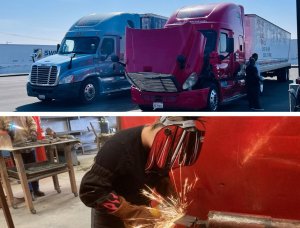
What High School Grads Need to Know About Pay, Debt, and Career Paths
Key Points to Consider High school graduates need to weigh their options between trade school and college. Each path offers different financial outcomes and career opportunities that affect future earning potential and job stability.- Trade school costs average $33,000 total vs college's $270,811 investment, resulting in $10,000 vs $36,327 in student debt, respectively
- Skilled trades workers earn competitive salaries ($54,000-$95,000+) with faster job entry and 90% career satisfaction rates
- Trade jobs show strong growth (6-11%) and resist automation, while 42% of college graduates work in jobs not requiring degrees
- Trade school graduates achieve break-even within two years and deliver a $313,000 median ROI vs $160,000 for bachelor's degrees
- Both paths lead to successful careers when aligned with personal interests, financial tolerance, and market demand for specific skills
The Shift Away from the Four-Year Degree
The trade school vs college debate continues to get attention. Today, 62% of white-collar workers say they would switch to skilled trades for better pay and job stability [1]. Student loan debt has passed $1.8 trillion, with borrowers carrying an average of $43,333 [2], and college costs have risen to $38,270 per year. At the same time, 42% of Gen Z workers are already in or pursuing trade jobs [3], and demand keeps growing as the U.S. faces a shortage of 300,000 electricians over the next decade [2]. For high school graduates weighing their options, understanding the trade school vs. college decision matters. This article covers costs, earning potential, job security, and career paths to help students choose the path that fits their goals.Understanding the Difference Between Trade School and College
Trade schools, also called vocational or technical schools, teach job-specific skills through hands-on training. Programs cover fields like commercial driving, automotive technology, welding, IT, and electrical work. Most programs typically range from six months to two years, though some programs, like CDL training, take as little as four weeks to complete [3]. College programs are broader. Students take general courses in science, English, history, and math for the first year or two before focusing on a major. A bachelor’s degree takes four years to finish at the very least. The two school types also differ in how courses are structured. Vocational education allocates 60% to practical training and 40% to classroom instruction. College programs are the reverse, with 60% academic learning and 40% hands-on experience through internships [4]. Trade schools skip the general education requirements to get students job-ready faster. Graduates earn diplomas or certificates and can start working or take licensing exams right away. Colleges award associate or bachelor’s degrees, which can lead to a wider range of career paths or further education. Trade school class sizes also tend to be smaller, while college courses often take place in large lecture halls [6].Trade School vs College: Cost, Debt, and Financial Impact
Cost is one of the biggest factors students consider when choosing between trade school and college. Trade school students pay an average of $33,000 for the total program [5]. Most programs fall between $5,000 and $15,000 for common fields [7]. Specialized programs like aviation maintenance can exceed $30,000, while esthetician training typically costs $2,000 to $4,000 [5]. College costs are higher across the board. In-state public school students pay around $10,440 per year in tuition, or $21,950 per year with room and board. Out-of-state students pay $26,820 per year for tuition, or $38,330 with housing. Private school students pay $36,880 per year for tuition alone, or $49,879 with room and board [5]. The debt gap between the two paths is significant. Trade school graduates finish with an average of $10,000 in student loans, while college graduates carry $36,327 in debt after interest [8]. When tuition, fees, loan interest, and lost wages during school are included, a bachelor’s degree program can cost $270,811 total [9]. Trade school graduates also tend to see a higher return on their education costs. Trade certificates have a median ROI of $313,000, compared to $160,000 for bachelor’s degrees [10]. Most trade school graduates break even on their investment within two years of finishing school.Earnings and Job Security for Trade School Graduates
Trade school graduates enter the workforce relatively quickly and at competitive pay. Trade school graduates earn an average of $67,000 in their first year [11]. Commercial truck drivers, for example, average $73,000 per year nationally [13]. Welders and IT support specialists follow similar patterns, with median pay ranging from $51,000 to $68,000 depending on the field and location [14] [15]. Earnings grow with experience, certifications, and specialization, and demand across these fields remains strong, with tens of thousands of positions opening each year. The job market for recent college graduates has been more difficult. About 5.6% of college graduates between ages 22 and 27 are unemployed [9]. Additionally, 42% of college graduates work in jobs that do not require a degree [9]. College graduates with bachelor’s degrees had a 5.8% unemployment rate in early 2026, which was higher than that of workers without degrees during the same period [10]. The trucking industry is short an estimated 60,000 to 80,000 drivers, with the BLS projecting 5 to 6 percent job growth for heavy truck drivers over the next decade [16]. Welding positions are expected to generate around 45,600 openings per year through 2034 [13]. For IT support specialists, the BLS projects approximately 50,500 job openings annually between 2024 and 2034 [15]. Trade work in these fields is also difficult to automate because it requires hands-on problem-solving in changing environments. Forbes reported that more than 90% of skilled trade workers say they are satisfied with their careers <[12]. Trade school graduates enter the workforce sooner and face less competition in the job market. The skills they develop tend to remain in demand, which supports long-term employment and steady wages.Conclusion
The trade school vs. college decision comes down to individual career goals and financial situations. Trade schools cost less, take less time, and lead to well-paying jobs with less debt. College offers a broader education and a wider range of career options. Students should weigh their interests, expected earnings, and how much debt they are willing to take on before choosing a path. Both options can lead to a successful career when the choice matches a student’s goals and the demand for that field. References[1] - https://www.newsweek.com/white-collar-workers-want-to-switch-to-the-trades-report-10834526
[4] - https://stekom.ac.id/en/article/5-differences-between-vocational-education-and-bachelors-degree
[5] - https://thebestschools.org/degrees/trade-schools-vs-college/
[6] - https://www.coursera.org/articles/trade-school-vs-college
[7] - https://www.edvisors.com/plan-for-college/careers/how-much-does-trade-school-cost/
[8] - https://cetweb.edu/blog/trade-school-vs-college-what-finance-experts-have-to-say
[9] - https://educationdata.org/college-degree-roi
[10] - https://freopp.org/whitepapers/does-college-pay-off-a-comprehensive-return-on-investment-analysis/
[11] - https://www.ziprecruiter.com/Salaries/Trade-School-Salary
[12] - https://www.forbes.com/sites/markcperna/2024/06/25/why-tradespeople-are-satisfied-in-their-careers/
[13] - https://www.ziprecruiter.com/Salaries/Cdl-Truck-Driver-Salary
[14] - https://www.bls.gov/ooh/production/welders-cutters-solderers-and-brazers.htm
[15] - https://www.coursera.org/articles/computer-support-specialist-salary
-
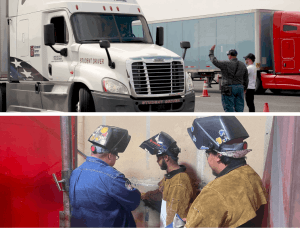
The Rise of Skilled Careers
Trade schools are seeing major growth over the last year. Skilled workers are doing better than their college-educated peers when it comes to jobs and pay. We have also seen a shift in the unemployment rates for people with college degrees. Trade workers had better employment rates for six months of the past year [1]. This shows how much things are changing in education and career choices. Students are asking hard questions about traditional degrees that leave them with massive amounts of student debt. Trade careers offer real alternatives that make sense financially. Trade schools are providing focused training for specific careers like welding, truck driving, and technology support. They cost much less than universities. Trade schools across different areas are getting record numbers of applications. This includes construction and manufacturing as well as healthcare and technology programs. The National Student Clearinghouse reports that enrollment in vocational-focused community colleges went up 16% from 2022 to 2023 [2]. This shows Americans are thinking differently about education after high school.What to Know About Trade Schools
Trade schools are revolutionizing career paths, offering faster, more affordable routes to stable employment while college costs soar and job markets shift toward skilled labor.- Trade school graduates enter the workforce 2-3 years earlier with only $10,000 debt versus $37,000 for college graduates
- Skilled trades like truck driving, and welding offer AI-proof careers with strong job security
- Trade programs cost less money overall and take 6-24 months to complete, delivering faster ROI than traditional degrees
- Gen Z embraces trades at record rates (55% considering trade careers), while 93% of parents now support their children's trade school decisions
What Trade Schools Are and Why They Matter Right Now
Trade schools offer a practical path compared to traditional four-year colleges. They provide focused training that gets students ready for specific careers in fields that need workers. Trade schools cut out general education requirements and focus on job skills. Students can finish their programs much faster—usually within two years.Types of Trade Schools and Programs
Trade education covers many different industries. Programs are built around what employers actually need. Here are the main categories:- Skilled trades: Electrician, plumbing, welding, and truck driving
- Technology: Computer information systems, IT, cybersecurity, and network management
- Commercial Driving: Over-the-road, regional, and local vehicle driving
What Makes the Best Trade Schools
Good trade schools share certain things. They have proper accreditation through agencies like the Commission of the Council of Occupational Education (COE). The best programs also have solid connections with employers who hire their graduates. They share real job placement rates and keep tuition affordable—typically much less than traditional college costs.Hands-On Learning That Works
Trade education focuses on doing, not just reading about things. Students remember about 75% of what they actually do, but only 10% of what they read [3]. Hands-on training puts students in situations that match real job sites. This lets students:- Build the muscle memory they need for technical work
- Practice solving problems in realistic situations
- Learn safety rules before they start working
College vs. Trade School: The Real Money Talk
The money gap between traditional college and trade school keeps getting bigger. College costs keep going up in 2026 while trade schools stay affordable.What College Actually Costs in 2026
College expenses hit new highs this year. Full-time students pay an average of $11,950 for public four-year in-state schools and $45,000 for private nonprofit colleges [4]. Even with financial aid helping some students, most graduate with heavy debt loads. Federal student loan debt averages over $37,000 per borrower [9]. This creates a financial burden that stays with graduates for years. First-time, full-time students borrow more than $7,700 each year just to keep going to school [6].Trade School Costs and How Long Programs Take
Trade school offers a different path that costs less. The average trade school program runs about $15,000 total [5]. Most vocational certificates cost between $5,000-$15,000 [6]. Trade programs take 6-24 months to finish [7]. Students get to work years before college graduates. Trade school students who take out loans graduate with around $10,000 in debt. That's about one-fourth of what bachelor's degree holders owe [8].Who Makes More Money and When
College graduates usually earn more over their whole careers. But it takes years for this advantage to show up because:- Trade professionals start working 2-3 years earlier
- They have much less debt ($10,000 vs. $37,000)
- Starting salaries in skilled trades compete well with college jobs
Job Security and Growth in Skilled Trades
Skilled trades face a serious worker shortage that keeps getting worse. According to the Bureau of Labor Statistics, the construction industry alone needs about 457,300 new workers to keep up with demand.Trades Are in High Demand
The skilled trades shortage comes from an aging workforce. More people retire than enter these fields. Data shows about five experienced tradespeople retire for every two new workers who start [10]. This gap means strong job security for people with technical skills.Careers That AI Can't Touch: Welding
Most digital jobs worry about automation, but skilled trades stay protected. Electricians, Plumbers, HVAC technicians and Welders, all of which are jobs protected from A.I., can expect thousands of new positions by 2030. These jobs need complex problem-solving in unpredictable situations. AI cannot do this type of work. A Washington Post report explains it well - these hands-on jobs offer something valuable. They cannot be outsourced or replaced by technology easily.Apprenticeships and Employer Training Programs
Apprenticeship programs mix paid on-the-job training with classroom learning [10]. People earn good wages from day one and get regular pay increases. Many apprenticeships work with community college courses. This creates another path to education that helps career growth.
People Are Changing Their Minds About Trade Careers
People think differently about blue-collar work than they used to. Skilled trades used to carry negative feelings for many families. Now these careers are seen as solid choices for economic stability.Gen Z Gets It
Gen Z has jumped into trades like no generation before them. 55% are considering trade careers—that's up 12% from last year [11]. People call them the "toolbelt generation". These young adults see that good-paying jobs are available with a high school diploma plus some additional training. Social media helped change their minds. About 67% say platforms like TikTok made them more aware of trade opportunities [11]. Gen Z women are almost as interested as men now. 52% of women versus 57% of men are looking at trade careers [11].Parents Are Coming Around
Parents have changed their thinking too. 35% now believe career and technical education works best for their kids. That's a big jump from just 13% in 2019 [12]. 93% would support their child going into trades [13].Conclusion
Trade schools have become real alternatives to traditional college education. The numbers support skilled trades workers who now have lower unemployment rates, less debt, and competitive wages. Trade schools are not just backup plans anymore. They're smart choices for Americans who want financial stability without heavy debt. Students thinking about their future should consider these facts when making decisions. Success looks different for everyone. For more Americans today, that success comes with practical skills and stable careers rather than college degrees. References[1] - https://www.washingtonpost.com/business/2026/01/31/labor-market-gap-trade-workers-white-collar/
[2] - https://www.building-products.com/more-young-adults-choosing-trades-over-college/
[3] - https://www.gwgci.org/hands-on-learning-vs-traditional-education-trades/
[4] - https://research.collegeboard.org/trends/college-pricing/highlights
[5] - https://www.studentloanplanner.com/student-loan-debt-statistics-average-student-loan-debt/
[6] - https://nces.ed.gov/programs/coe/indicator/cub
[7] - https://www.bestcolleges.com/research/how-much-does-trade-school-cost/
[8] - https://www.edvisors.com/plan-for-college/careers/how-much-does-trade-school-cost/
[9] - https://freopp.org/whitepapers/does-college-pay-off-a-comprehensive-return-on-investment-analysis/
[10] - https://ptt.edu/rising-job-growth-in-skilled-trades-what-you-need-to-know/
-

What’s Behind California’s Mass Commercial License Revocations
California officials are moving to revoke 17,000 CDLs issued to immigrant drivers across the state [4]. The decision comes after state authorities discovered these licenses had expiration dates that went beyond the drivers' legal work authorization in the United States [4]. Because Federal officials have taken notice of California's CDL situation, they're withholding nearly $160 million in transportation funding because of compliance issues [5]. The federal government also pulled $40 million in funding, pointing to California’s failure to enforce English language requirements for commercial drivers [4]. While roughly 20% of the nation’s truck drivers are immigrants, it’s important to understand that only about 5% of those are non-domiciled commercial licenses – meaning about 200,000 drivers earned their CDL in a state where they are not a legal resident [1]. California has provided some breathing room by delaying these revocations until March 2026, giving affected drivers more time to prove they legally qualify for their commercial licenses.What You Need to Know
California's move to revoke 17,000 commercial driver's licenses shows problems in how the state handles CDL licensing. The situation affects immigration policy, road safety, and federal funding requirements.- California pushed back CDL revocations to March 2026 after immigrant truckers filed a lawsuit, but federal officials still withheld $160 million in funding because the state missed compliance deadlines.
- Trucking schools found ways around regulations, with at least 184 schools operating without state oversight by keeping fees under $2,500, which led to corruption and poorly trained drivers.
- Federal investigators found widespread fraud, including DMV workers who issued 216 fake CDLs and nearly 3,000 training providers getting removed for falsifying training records.
- Better verification processes should make roads safer by making sure only properly trained drivers operate commercial vehicles, which helps legitimate drivers by raising industry standards.
- The situation affects about 20% of truck drivers nationwide, with immigrant drivers playing a key role in California's freight economy even though they represent only 5% of all CDLs.
How CDL Schools and Government Regulations Built This Problem
This is just the tip of the iceberg. My team will continue to force California to prove they have removed every illegal immigrant from behind the wheel of semitrucks and school buses. – Sean P. Duffy, U.S. Secretary of Transportation, enforcing federal safety standards in commercial driving
The California commercial drivers license crisis didn't happen overnight. Much of the problem comes from widespread fraud at driving schools and weak government oversight. A major legal loophole lets trucking schools charge $2,500 or less and operate without any state licensing—they basically avoid all oversight. At least 184 schools currently work within this gap [1].Fraudulent Trucking Schools Impact Licensing Integrity
Federal investigators found serious corruption involving DMV employees who fraudulently issued commercial licenses to drivers who weren't qualified. DMV workers changed records to make it look like applicants had passed required tests when they actually failed. This led to at least 216 fraudulent CDLs being issued [2]. Some schools even rebranded and kept operating after losing their licenses, often in the same exact location [3].From the Central Valley to Southern California, a disturbing pattern has emerged: drivers with inadequate training or falsified paperwork are slipping through regulatory cracks and into 80,000-pound vehicles. These incidents have shaken public confidence and exposed the urgent need to eliminate so-called “commercial driver’s license mills,” fraudulent or substandard training operations that exploit regulatory gaps and send unprepared drivers onto our roads. – David Bither, VP at Advanced Career Institute
Weak Oversight Affected CDL Distribution
Federal authorities removed nearly 3,000 training providers from the Federal Motor Carrier Safety Administration's Registry. These providers had been falsifying training data and failing to meet basic curriculum standards [4]. The system previously allowed almost anyone to register as a CDL trainer without proving they had the right qualifications [5]. The American Trucking Associations pointed out that "the integrity of that system has been undermined by insufficient oversight and enforcement" [6]. This regulatory failure led to the issuance of approximately 62,000 active non-domiciled CDLs whose eligibility couldn't be properly verified [7]. These problems directly contributed to California's current revocation situation. The impact of these new regulations run deep for California, stating that only 10,000 of the 200,000 non-citizen commercial license holders would keep their eligibility [4].California's CDL Revocation Focuses on Safety and Training Standards
California officials say the review of commercial drivers license California credentials aims to improve road safety across the state. The DMV wants to make sure only qualified drivers operate commercial vehicles on California highways. Road safety experts know that commercial license requirements exist for good reasons. Drivers need proper training and skills to handle large vehicles safely. The CDL verification process also helps catch people who got their licenses through fake training or fraudulent means. The review process gives legitimate drivers a chance to prove their qualifications. Industry experts point out that better standards help properly trained drivers by making the profession more respected and weeding out unqualified competitors. New drivers entering the field can expect better career opportunities from these changes. Companies are starting to value verified credentials more, which means drivers with real training have an advantage. The current situation actually helps career prospects for people who complete legitimate training programs.High-quality commercial driver training cannot be rushed, skipped, or faked. It requires multiple weeks of training, including rigorous instruction, hands-on skill development and supervised, behind-the-wheel training. – David Bither, VP at Advanced Career Institute
Training schools that meet federal standards report their students are finding better job opportunities. The industry is putting more emphasis on verified qualifications, which benefits drivers who went through proper CDL training programs. California's commercial drivers license system is working toward creating a safer, more professional trucking workforce while keeping essential transportation services running throughout the state.Conclusion
California's commercial trucking industry stands at a crossroads as the state addresses licensing concerns. The revocation of 17,000 commercial driver's licenses certainly marks a significant shift for the transportation sector. Nevertheless, this transition period offers a valuable opportunity to rebuild trust and integrity within the system. The extended deadline until March 2026 provides affected drivers time to verify their qualifications and maintain their livelihoods. Consequently, this grace period demonstrates a balanced approach between regulatory compliance and compassion for the workforce that keeps America's supply chains moving. Undoubtedly, the strengthened verification processes will create a more professional driving environment. Future CDL applicants will benefit from clearer standards and improved training requirements. Therefore, new drivers entering the field can expect greater respect for their credentials and potentially better career opportunities as employers increasingly value properly verified qualifications. Road safety ultimately improves when all commercial drivers meet consistent training standards. Though challenging in the short term, these regulatory changes pave the way for a safer highway system across California. Additionally, legitimate training providers will thrive as the industry shifts toward quality over quantity in driver preparation. The trucking profession remains essential to America's economy, and these improvements help ensure its longevity. Despite temporary disruptions, California's commitment to addressing licensing issues demonstrates the state's dedication to maintaining a robust transportation infrastructure. The future indeed looks promising for properly trained commercial drivers who will find themselves in high demand across the Golden State's busy highways.FAQs
How will this revocation affect immigrant drivers?
The revocation significantly impacts immigrant drivers, particularly those with expired work authorizations or unverified immigration statuses. However, California has delayed the revocations until March 2026, allowing affected drivers more time to prove their legal qualifications and maintain their licenses.What are the safety concerns behind this decision?
Safety concerns include potential issues with driver qualifications, language proficiency, and adherence to road safety standards. The revocation aims to ensure that all commercial drivers meet consistent training and safety requirements to operate large vehicles on state highways.How does this affect the trucking industry in California?
This decision could lead to a shortage of qualified drivers in California's trucking industry, potentially impacting the state's supply chain and logistics network. However, it may also create opportunities for properly trained new drivers entering the field and elevate industry professionalism.What steps are being taken to address the situation?
California is working to balance regulatory compliance with compassion for the workforce. The state has extended the deadline for revocations, allowing time for affected drivers to verify their qualifications. Additionally, there are efforts to improve oversight of CDL schools and strengthen the verification processes for commercial licenses.References
[1] - https://www.cnn.com/2025/11/14/us/immigration-california-revokes-commercial-drivers-licenses-hnk
[2] - https://www.sacbee.com/opinion/op-ed/article314561662.html
[4] - https://www.foxla.com/news/california-unlicensed-truck-driving-schools-loophole
[8] - https://www.pajcic.com/posts/cdl-mills-trucking-industry-most-dangerous-open-secret/
[9] - https://www.trucking.org/news-insights/ata-applauds-dot-crackdown-cdl-mills
[10] - https://www.stl.news/californias-cdl-licensing-scandal-public-concerns/
[11] - https://www.latimes.com/california/story/2026-01-07/california-delayed-cancelation-of-immigrant-truckers-licenses-so-feds-will-withhold-160-million
-
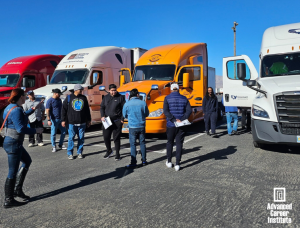
Las Vegas Campus Celebrates Another Successful Open House!
On Saturday January 11th, we held an open house at our CDL school in Las Vegas for aspiring truck drivers. We held this event to allow people interested in our classes to get hands-on experience at our facility! From classroom tours, to meeting with industry professionals, and even allowing our prospective students to see our training yard and trucks up close and personal, we are happy to show them everything that Advanced Career Institute’s CDL school has to offer! [video width="800" height="800" mp4="https://advanced.edu/wp-content/uploads/2025/01/January-2024-Blog-Carosel.mp4"][/video] From the first day, we make it a top priority to prepare our students for their future! With state-of-the-art equipment and hands-on training, we are ready to show our students the importance of their work in truck driving. Advanced Career Institute combines comprehensive classroom instruction with hands-on range training to equip students with essential driving knowledge. Students gain valuable behind-the-wheel experience under the guidance of skilled instructors. We also offer hands-on truck driving simulation training to prepare students for real-world driving scenarios. Their state-of-the-art simulators provide a safe and controlled environment for mastering essential skills and techniques. The benefits of studying at Advanced Career Institute’s CDL school don’t stop there. Throughout your time here, you’ll have the opportunity to network with several of our trucking partners! We're here to help you build your relationships in our industry to help you kickstart your career! If you’re looking to drive your career in a new direction, Advanced Career Institute is here to help you! ACI open houses connect you with others and simplify the process of getting started! Keep an eye out for our next event! Call us at 877-649-9614 or reach out online to start your journey today! We would love to help you learn more about enrolling in your future! -
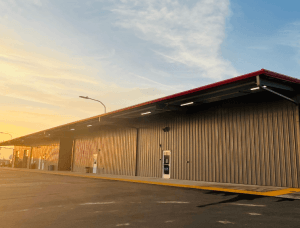
Welcome to our new California Welding and CDL Training Facility
Big news at ACI! We have officially moved into our newly built Visalia campus! Our new campus is located at 1243 N Clancy St. Visalia, CA 93291. Our upgraded facility has improved CDL training and welding facilities, allowing students to further their careers in a new state-of-the-art learning environment.CDL Training at our Visalia, CA Campus
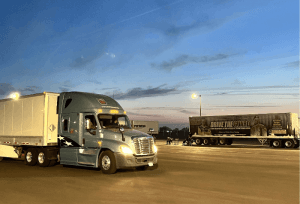
Our CDL training facilities have grown! Our 4-acre training yard is freshly paved and painted. Our students have plenty of room to practice all backing maneuvers and get comfortable operating a commercial vehicle. Our new driving range allows 7 to 8 trucks on the yard at once, with multiple students simultaneously practicing different parts of training. ACI’s new Visalia campus has dedicated spaces to practice pre-trip inspections, different driving techniques, and classrooms for students to study. These classrooms have been upgraded with the latest education technologies to allow students a modern learning environment. We have also added a new covered, outdoor lunch area when students are ready for a much-deserved break. We are ecstatic about the opening of our new campus, and can now train anywhere between 75 and 85 students at any given time.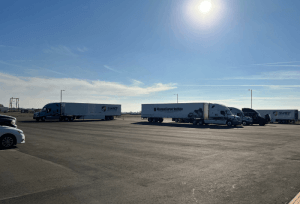
Welding Training at ACI’s Visalia Campus
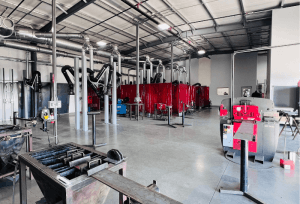
Students are given a warm welcome to the brand-new welding lab at our Visalia Campus. The state-of-the-art welding lab is 5,000 sq ft. Welding students have dedicated areas to practice the various welding techniques required to receive their American Welding Society certification. Our new space has increased ventilation and private welding bays for each student to focus individually on mastering their craft. Same as our CDL students, welding students also have access to our upgraded classrooms and have a dedicated space to learn about blueprint reading, construction math, and site/shop safety. With ACI’s new welding lab and our four-class schedules, there can be 100 welding students at our facility on any given day!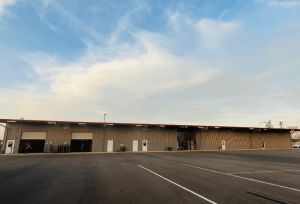
Student-centered Improvements
Students' success is important to us at ACI, and our new Visalia campus has our student's success at its core. Students can expect an improved experience from start to finish. We have upgraded our front office spaces so that new and current students can quickly and easily find the help they need. Our admissions staff have private offices to help you find your perfect training path and our job placement team has a dedicated space to help you find the perfect job after graduation from Advanced Career Institute. Student lounges and a spacious kitchen area give students a space to relax and feel at home while training at ACI.
 Are you ready to experience all that our new Visalia campus can offer? If so, contact us today at 877-649-9614 to get started!
-

Life as a trucker is more and more favorable for women with the chance of equal pay!
Updated November 2022 As the labor market tightens, many women are looking to infiltrate male-dominated industries in search of higher and equal pay. According to a Women in Trucking study, the percentage of female drivers in the trucking industry grew from 2019 to 2022. Female professional drivers increased to 13.7%, a three percent increase from 2019. Many are citing competitive pay as their motive for entrance into the industry. Noticing the discrepancy between the amount of male and female truckers, Ellen Voie began the Women In Trucking Association in 2007. She wanted to create a network of female truck drivers and encourage a more diverse representation of women in the profession. While helping the general public better visualize female truck drivers, Voie hopes that other women will be encouraged to get licensed as well. The association continues to raise awareness of specific issues, such as equal pay, to help bring more women to the industry. They also want to focus on the encouragement of more women in executive and managerial positions. If you are a woman 0r know a woman interested in getting started in the trucking industry, here are some facts you can share with them about the opportunities trucking provides:- Truckers' pay is determined by load, hours, and mileage. Therefore, gender, ethnicity, or age does not affect your earning potential.
- The advancement opportunities for a truck driver are endless, and all depend on your personal hard work.
- With more women grasping at the opportunity for equal pay, we can predict a climbing rate of female employment nationally, which is a small part of acting against female poverty in the United States.
- In addition to pay opportunities, as a trucker, you will get the freedom to travel and see the beautiful country.