

Blog
Helpful Information About Potential Welding Careers & Trucking Jobs
-
What High School Grads Need to Know About Pay, Debt, and Career Paths
Key Points to Consider
High school graduates need to weigh their options between trade school and college. Each path offers different financial outcomes and career opportunities that affect future earning potential and job stability.- Trade school costs average $33,000 total vs college's $270,811 investment, resulting in $10,000 vs $36,327 in student debt, respectively
- Skilled trades workers earn competitive salaries ($54,000-$95,000+) with faster job entry and 90% career satisfaction rates
- Trade jobs show strong growth (6-11%) and resist automation, while 42% of college graduates work in jobs not requiring degrees
- Trade school graduates achieve break-even within two years and deliver a $313,000 median ROI vs $160,000 for bachelor's degrees
- Both paths lead to successful careers when aligned with personal interests, financial tolerance, and market demand for specific skills
The Shift Away from the Four-Year Degree
The trade school vs college debate continues to get attention. Today, 62% of white-collar workers say they would switch to skilled trades for better pay and job stability [1]. Student loan debt has passed $1.8 trillion, with borrowers carrying an average of $43,333 [2], and college costs have risen to $38,270 per year. At the same time, 42% of Gen Z workers are already in or pursuing trade jobs [3], and demand keeps growing as the U.S. faces a shortage of 300,000 electricians over the next decade [2]. For high school graduates weighing their options, understanding the trade school vs. college decision matters. This article covers costs, earning potential, job security, and career paths to help students choose the path that fits their goals.Understanding the Difference Between Trade School and College
Trade schools, also called vocational or technical schools, teach job-specific skills through hands-on training. Programs cover fields like commercial driving, automotive technology, welding, IT, and electrical work. Most programs typically range from six months to two years, though some programs, like CDL training, take as little as four weeks to complete [3]. College programs are broader. Students take general courses in science, English, history, and math for the first year or two before focusing on a major. A bachelor’s degree takes four years to finish at the very least. The two school types also differ in how courses are structured. Vocational education allocates 60% to practical training and 40% to classroom instruction. College programs are the reverse, with 60% academic learning and 40% hands-on experience through internships [4]. Trade schools skip the general education requirements to get students job-ready faster. Graduates earn diplomas or certificates and can start working or take licensing exams right away. Colleges award associate or bachelor’s degrees, which can lead to a wider range of career paths or further education. Trade school class sizes also tend to be smaller, while college courses often take place in large lecture halls [6].Trade School vs College: Cost, Debt, and Financial Impact
Cost is one of the biggest factors students consider when choosing between trade school and college. Trade school students pay an average of $33,000 for the total program [5]. Most programs fall between $5,000 and $15,000 for common fields [7]. Specialized programs like aviation maintenance can exceed $30,000, while esthetician training typically costs $2,000 to $4,000 [5]. College costs are higher across the board. In-state public school students pay around $10,440 per year in tuition, or $21,950 per year with room and board. Out-of-state students pay $26,820 per year for tuition, or $38,330 with housing. Private school students pay $36,880 per year for tuition alone, or $49,879 with room and board [5]. The debt gap between the two paths is significant. Trade school graduates finish with an average of $10,000 in student loans, while college graduates carry $36,327 in debt after interest [8]. When tuition, fees, loan interest, and lost wages during school are included, a bachelor’s degree program can cost $270,811 total [9]. Trade school graduates also tend to see a higher return on their education costs. Trade certificates have a median ROI of $313,000, compared to $160,000 for bachelor’s degrees [10]. Most trade school graduates break even on their investment within two years of finishing school.Earnings and Job Security for Trade School Graduates
Trade school graduates enter the workforce relatively quickly and at competitive pay. Trade school graduates earn an average of $67,000 in their first year [11]. Commercial truck drivers, for example, average $73,000 per year nationally [13]. Welders and IT support specialists follow similar patterns, with median pay ranging from $51,000 to $68,000 depending on the field and location [14] [15]. Earnings grow with experience, certifications, and specialization, and demand across these fields remains strong, with tens of thousands of positions opening each year. The job market for recent college graduates has been more difficult. About 5.6% of college graduates between ages 22 and 27 are unemployed [9]. Additionally, 42% of college graduates work in jobs that do not require a degree [9]. College graduates with bachelor’s degrees had a 5.8% unemployment rate in early 2026, which was higher than that of workers without degrees during the same period [10]. The trucking industry is short an estimated 60,000 to 80,000 drivers, with the BLS projecting 5 to 6 percent job growth for heavy truck drivers over the next decade [16]. Welding positions are expected to generate around 45,600 openings per year through 2034 [13]. For IT support specialists, the BLS projects approximately 50,500 job openings annually between 2024 and 2034 [15]. Trade work in these fields is also difficult to automate because it requires hands-on problem-solving in changing environments. Forbes reported that more than 90% of skilled trade workers say they are satisfied with their careers <[12]. Trade school graduates enter the workforce sooner and face less competition in the job market. The skills they develop tend to remain in demand, which supports long-term employment and steady wages.Conclusion
The trade school vs. college decision comes down to individual career goals and financial situations. Trade schools cost less, take less time, and lead to well-paying jobs with less debt. College offers a broader education and a wider range of career options. Students should weigh their interests, expected earnings, and how much debt they are willing to take on before choosing a path. Both options can lead to a successful career when the choice matches a student’s goals and the demand for that field. References[1] - https://www.newsweek.com/white-collar-workers-want-to-switch-to-the-trades-report-10834526
[4] - https://stekom.ac.id/en/article/5-differences-between-vocational-education-and-bachelors-degree
[5] - https://thebestschools.org/degrees/trade-schools-vs-college/
[6] - https://www.coursera.org/articles/trade-school-vs-college
[7] - https://www.edvisors.com/plan-for-college/careers/how-much-does-trade-school-cost/
[8] - https://cetweb.edu/blog/trade-school-vs-college-what-finance-experts-have-to-say
[9] - https://educationdata.org/college-degree-roi
[10] - https://freopp.org/whitepapers/does-college-pay-off-a-comprehensive-return-on-investment-analysis/
[11] - https://www.ziprecruiter.com/Salaries/Trade-School-Salary
[12] - https://www.forbes.com/sites/markcperna/2024/06/25/why-tradespeople-are-satisfied-in-their-careers/
[13] - https://www.ziprecruiter.com/Salaries/Cdl-Truck-Driver-Salary
[14] - https://www.bls.gov/ooh/production/welders-cutters-solderers-and-brazers.htm
[15] - https://www.coursera.org/articles/computer-support-specialist-salary
-
Helpful CDL Study Habits
The trucking industry faces a shortage of about 80,000 drivers, according to the American Trucking Associations. Demand for qualified CDL holders is high, and the right preparation makes a measurable difference in whether candidates pass on the first attempt. This guide covers the 12 strategies that matter most.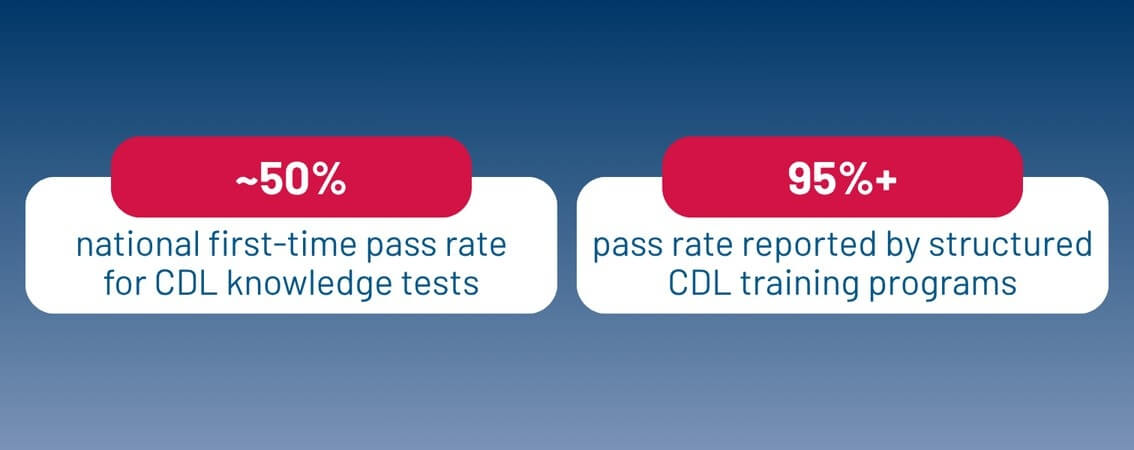 Source: Driving-Tests.org CDL program data. Individual school results may vary.
Key Takeaways
- Study your state's CDL manual — every test question comes directly from this book.
- Take practice tests daily for at least one week — they reveal weak spots and build test familiarity.
- Master the pre-trip inspection — it's one of the top failure points on the skills test.
- Memorize exact numbers — examiners expect precise answers on PSI, tread depths, and distances.
- Practice backing maneuvers more than anything else — it's the single most common failure point on the skills test.
- Enroll in a professional training program — some structured programs report pass rates of 95% or higher, compared to a national average of around 50%.
1. Study the CDL Manual Thoroughly
Your state's CDL manual is your primary resource. Every question on the knowledge test comes from this book. Download the California CDL handbook here.How to study it effectively
- Read it a minimum of three times — first for familiarity, then for retention.
- Focus only on sections that match your license class. Skip passenger and school bus chapters unless you need those endorsements.
- Mark key numbers and measurements as you go. Write summary notes in your own words.
- Use flashcards for specific numbers, measurements, and procedures.
- Start several weeks out. Daily study beats cramming every time.
2. Take CDL Practice Tests Regularly
Practice tests show you exactly where you stand before test day. Plan to take them daily for at least one week leading up to your exam.Where to find free practice tests
- Driving-Tests.org — general knowledge, air brakes, HazMat, school bus, and pre-trip. Includes manual-based explanations.
- CristCDL.com — free since 1999, no sign-up, unlimited attempts. Questions pulled directly from each state's DMV manual.
3. Enroll in a Professional CDL Training Program
Self-study works for some people, but structured programs offer something books can't: time behind the wheel in a real truck with an experienced instructor. National first-time pass rates for CDL knowledge tests hover around 50%, according to data from Driving-Tests.org. Some structured training programs report pass rates of 95% or higher for candidates who complete their programs. These programs combine classroom instruction with actual behind-the-wheel practice, which books alone can't provide.What to look for in a CDL school
- FMCSA approval — confirms the school meets federal safety and training standards. Verify this before enrolling.
- Student-to-instructor ratio — programs with 3:1 ratios give you more one-on-one time. Larger classes mean less individual attention.
- Job placement assistance — schools with carrier connections can move you from training to a paying job faster.
- Cost and financing — programs typically run $3,000 to $10,000. Company-sponsored options can drop this to as little as $155 in exchange for a driving commitment. Many schools offer scholarships and military benefits.
4. Master the Pre-Trip Inspection
The pre-trip inspection is one of the most common failure points on the CDL skills test. You must name each part, point to it, and explain what problems you're looking for. Vague language and missed components result in automatic failure.The 7-Point Inspection System
- Engine compartment: fluid levels, belts, hoses
- In-vehicle checks: gauges, brakes, emergency equipment
- Front of vehicle: lights, leaks, steering components
- Sides of vehicle: mirrors, fuel tanks, battery
- Rear of vehicle: lights and reflectors
- Coupling devices (combination vehicles): fifth wheel, air lines
- Trailer: damage, proper equipment
Common mistakes that cause failures
- Using vague or informal language instead of exact manual terminology
- Skipping the air brake test — this is an automatic failure
- Failing to state the exact tread depth: 4/32" for steer tires
- Rushing through or losing your order mid-inspection
5. Memorize Critical Numbers and Measurements
When examiners ask about air brake pressures, tire tread depths, or following distances, they expect exact answers. "Around" and "approximately" are not acceptable responses during testing.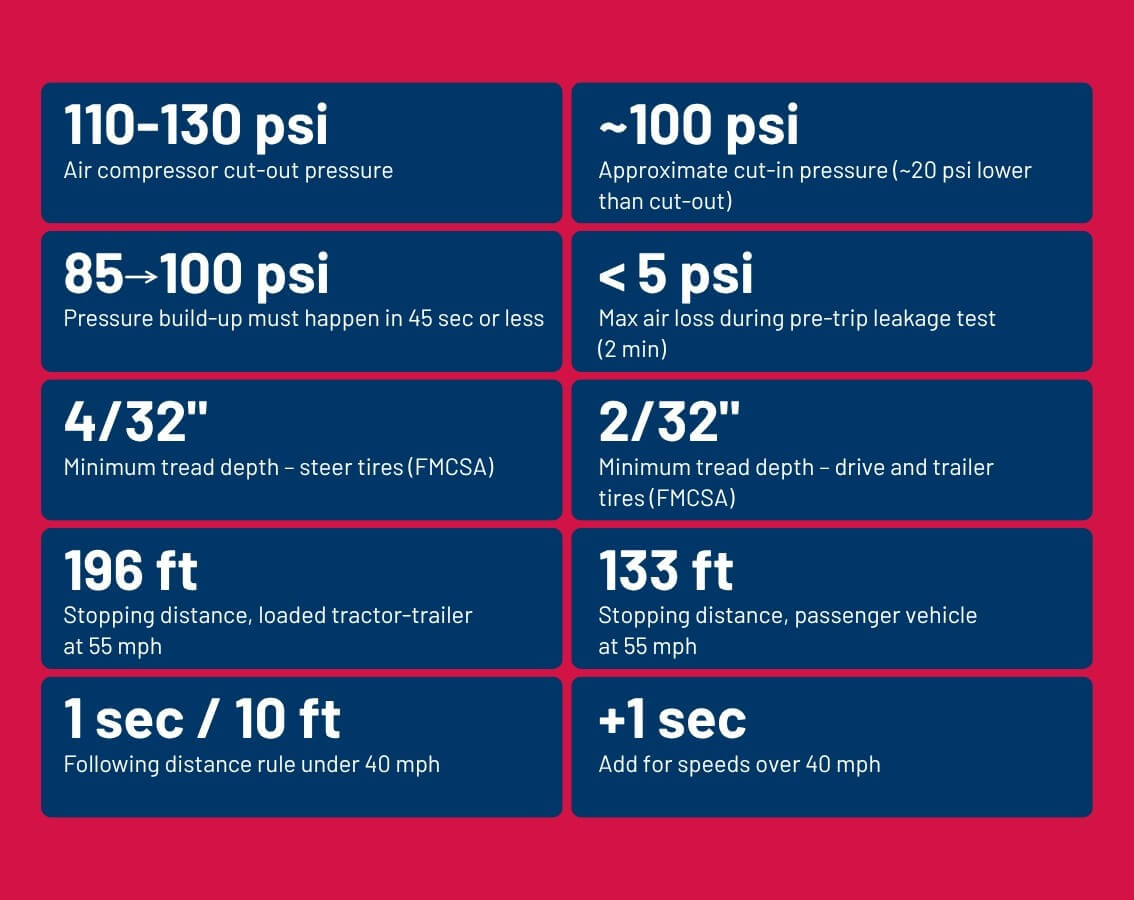 Sources: FMCSA regulations; state CDL manuals. Air brake pressure ranges may vary slightly by vehicle manufacturer.
6. Practice Backing Maneuvers Extensively
Backing maneuvers are the single most common failure point on the CDL skills test. The Basic Control Skills Test now includes 4 exercises in tighter spaces. Examiners choose from six possible maneuvers.The 6 possible backing exercises
- Straight-line backing — reverse between cone rows without hitting boundaries
- Offset backing — back left or right into a space beside your starting position
- Parallel parking (driver side) — standard parallel into a marked space
- Parallel parking (conventional) — right-side approach
- Alley docking — rear bumper must land within 3 feet of the end of the space
- Reverse offset backing — combines parallel and offset moves; rear bumper must land inside a 3-foot box
Scoring rules to know before you start
- Crossing a boundary line: 2 points
- Extra pull-up: 1 point
- Automatic failure: 13 points total
- Free moves: 1 pull-up + 1 look (straight-line); 2 of each (offset)
7. Understand Air Brake Systems Inside Out
The air brakes endorsement requires both theory and hands-on inspection knowledge. This is the single hardest portion of the CDL exam — 80% of first-time applicants fail it.Key components and what they do
- Air compressor — pressurizes air and sends it to storage tanks; runs continuously with the engine
- Governor — controls when the compressor pumps; cuts in around 100 psi, cuts out between 110-130 psi
- Air storage tanks — hold enough reserve for 10-12 full brake applications if the compressor fails
- Brake chambers — convert compressed air into mechanical force that stops the truck
- Slack adjuster — connects the pushrod to the S-cam, which forces brake shoes against the drum
- Spring brakes — emergency system; engage automatically if air pressure drops too low
Air brake inspection steps (in order)
- Turn the key on, then fan the service brake below 90 psi
- Start the engine and wait for the governor to cut out between 120-140 psi
- Press both truck and trailer air valves
- Run leakage test: hold service brake for 60 seconds and check for pressure drop
8. Get Plenty of Behind-the-Wheel Practice
Book knowledge prepares you for the written exam. Seat time builds the skills to pass the skills test. Most training programs structure it this way:Typical training progression
Week 2 — Straight-line backing, basic shifting, pre-trip practice Week 3 — Offset backing, alley docking, turning techniques Week 4 — Road driving on city streets, highways, and varying traffic conditions After every session: write down what went well and what gave you trouble. Use those notes to guide your next study period.9. Learn From Experienced Instructors
Federal rules require CDL instructors to hold a valid CDL and at least two years of commercial driving experience. Their hands-on background gives you access to practical knowledge that textbooks don't cover.Questions to ask before you enroll
- Have they driven long-haul routes in difficult conditions?
- Have they handled brake failures, blown tires, or emergency situations?
- Do they adjust their teaching based on how individual students learn?
10. Create a Structured Study Schedule
You must hold your Commercial Learner's Permit for at least 14 days before taking the CDL skills test. Use every one of those days with a plan.
Study in 45-minute sessions with short breaks in between. Silence your phone. Set a specific goal for each session — a number of pages, or one complete inspection section.Days 1-3 General knowledge and pre-trip inspection basics Days 4-6 Air brakes: components, pressure numbers, and inspection steps Days 7-9 Combination vehicles: coupling, uncoupling, and combination rules Days 10-12 Full practice tests — use scores to target weak areas Days 13-14 Light review only. Do not cram the night before. 11. Stay Calm and Manage Test Day Anxiety
Nerves are normal. The candidates who perform best on test day treat it like another training session rather than a high-pressure performance.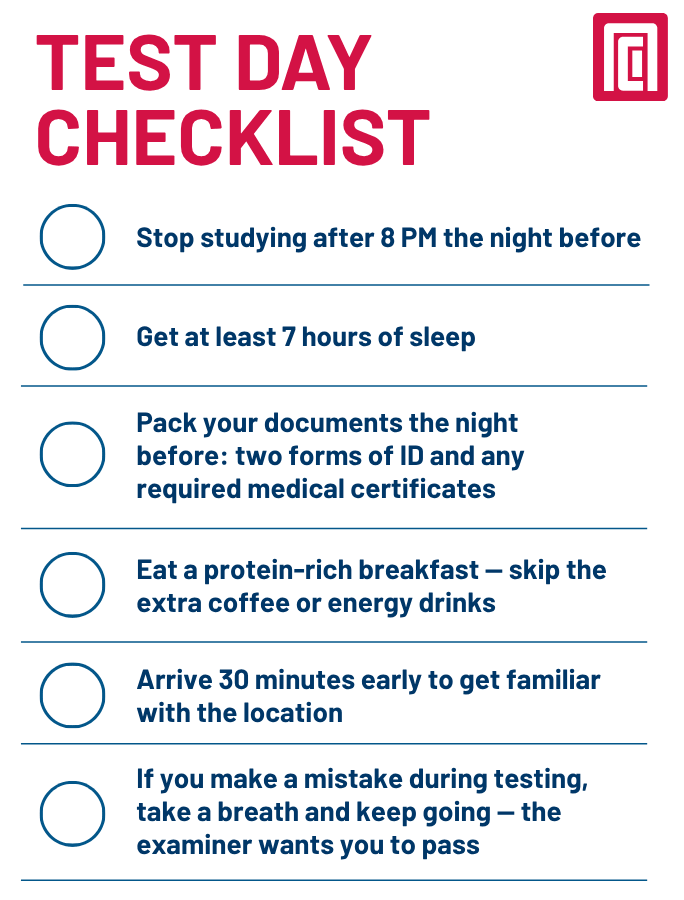
12. Know Why People Fail — and Avoid the Same Mistakes
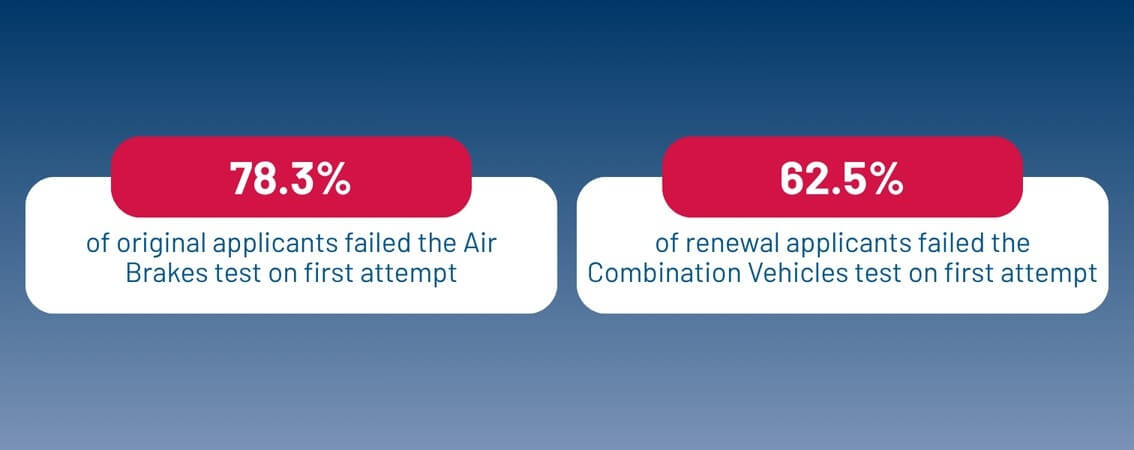 Source: California DMV, Statewide Evaluation of CDL Written Knowledge Tests (Research Report RSS-08-225, 2008). California-specific data; results may vary by state.
Understanding where candidates typically fail gives you a clear roadmap for where to focus your preparation. The two hardest written tests — Air Brakes and Combination Vehicles — have documented failure rates that underscore how much focused study they require.
Source: California DMV, Statewide Evaluation of CDL Written Knowledge Tests (Research Report RSS-08-225, 2008). California-specific data; results may vary by state.
Understanding where candidates typically fail gives you a clear roadmap for where to focus your preparation. The two hardest written tests — Air Brakes and Combination Vehicles — have documented failure rates that underscore how much focused study they require.
Written test failures
- Skipping the manual and relying on common sense — the exam covers technical specifics that require actual study
- Rushing through questions and making careless errors
- Second-guessing correct answers
- Using only practice tests without reading the manual — this leaves gaps that show up on test day
Skills test failures
- Turning too fast, causing the trailer to drift into other lanes
- Oversteering during straight-line backing or not catching trailer drift early
- Underestimating stopping distances and braking too late
- Safety violations — running red lights, failing to signal, or any accident during testing — result in automatic disqualification
Conclusion
Passing your CDL test on the first try comes down to preparation and consistency. Study your state's manual thoroughly, take practice tests daily, and enroll in a professional training program if you can. Focus extra attention on pre-trip inspections, backing maneuvers, and air brake systems — these are where most candidates fall short. Memorize the critical numbers, get real seat time behind the wheel, and build a structured study plan during your 14-day CLP waiting period. With the right preparation, first-time success is within reach.FAQs
How long should I study before taking my CDL test?
Start studying several weeks before your scheduled exam, with at least 45 minutes of focused study each day. Consistent daily sessions beat cramming and lead to better retention on test day.What is the minimum tire tread depth for CDL vehicles?
Steer tires require a minimum of 4/32 inch tread depth in every major groove; drive and trailer tires require 2/32 inch minimum.What are the most common reasons people fail the CDL skills test?
Backing maneuvers, particularly alley docking, are the top failure point. Other common failures include turning too fast, delayed braking, and incomplete or vague pre-trip inspections.What should I do on test day to perform my best?
Get at least 7 hours of sleep, eat a protein-rich breakfast, and arrive 30 minutes early. If you make a mistake during testing, take a breath, trust your training, and keep going. -
The Rise of Skilled Careers
Trade schools are seeing major growth over the last year. Skilled workers are doing better than their college-educated peers when it comes to jobs and pay. We have also seen a shift in the unemployment rates for people with college degrees. Trade workers had better employment rates for six months of the past year [1]. This shows how much things are changing in education and career choices. Students are asking hard questions about traditional degrees that leave them with massive amounts of student debt. Trade careers offer real alternatives that make sense financially. Trade schools are providing focused training for specific careers like welding, truck driving, and technology support. They cost much less than universities. Trade schools across different areas are getting record numbers of applications. This includes construction and manufacturing as well as healthcare and technology programs. The National Student Clearinghouse reports that enrollment in vocational-focused community colleges went up 16% from 2022 to 2023 [2]. This shows Americans are thinking differently about education after high school.What to Know About Trade Schools
Trade schools are revolutionizing career paths, offering faster, more affordable routes to stable employment while college costs soar and job markets shift toward skilled labor.- Trade school graduates enter the workforce 2-3 years earlier with only $10,000 debt versus $37,000 for college graduates
- Skilled trades like truck driving, and welding offer AI-proof careers with strong job security
- Trade programs cost less money overall and take 6-24 months to complete, delivering faster ROI than traditional degrees
- Gen Z embraces trades at record rates (55% considering trade careers), while 93% of parents now support their children's trade school decisions
What Trade Schools Are and Why They Matter Right Now
Trade schools offer a practical path compared to traditional four-year colleges. They provide focused training that gets students ready for specific careers in fields that need workers. Trade schools cut out general education requirements and focus on job skills. Students can finish their programs much faster—usually within two years.Types of Trade Schools and Programs
Trade education covers many different industries. Programs are built around what employers actually need. Here are the main categories:- Skilled trades: Electrician, plumbing, welding, and truck driving
- Technology: Computer information systems, IT, cybersecurity, and network management
- Commercial Driving: Over-the-road, regional, and local vehicle driving
What Makes the Best Trade Schools
Good trade schools share certain things. They have proper accreditation through agencies like the Commission of the Council of Occupational Education (COE). The best programs also have solid connections with employers who hire their graduates. They share real job placement rates and keep tuition affordable—typically much less than traditional college costs.Hands-On Learning That Works
Trade education focuses on doing, not just reading about things. Students remember about 75% of what they actually do, but only 10% of what they read [3]. Hands-on training puts students in situations that match real job sites. This lets students:- Build the muscle memory they need for technical work
- Practice solving problems in realistic situations
- Learn safety rules before they start working
College vs. Trade School: The Real Money Talk
The money gap between traditional college and trade school keeps getting bigger. College costs keep going up in 2026 while trade schools stay affordable.What College Actually Costs in 2026
College expenses hit new highs this year. Full-time students pay an average of $11,950 for public four-year in-state schools and $45,000 for private nonprofit colleges [4]. Even with financial aid helping some students, most graduate with heavy debt loads. Federal student loan debt averages over $37,000 per borrower [9]. This creates a financial burden that stays with graduates for years. First-time, full-time students borrow more than $7,700 each year just to keep going to school [6].Trade School Costs and How Long Programs Take
Trade school offers a different path that costs less. The average trade school program runs about $15,000 total [5]. Most vocational certificates cost between $5,000-$15,000 [6]. Trade programs take 6-24 months to finish [7]. Students get to work years before college graduates. Trade school students who take out loans graduate with around $10,000 in debt. That's about one-fourth of what bachelor's degree holders owe [8].Who Makes More Money and When
College graduates usually earn more over their whole careers. But it takes years for this advantage to show up because:- Trade professionals start working 2-3 years earlier
- They have much less debt ($10,000 vs. $37,000)
- Starting salaries in skilled trades compete well with college jobs
Job Security and Growth in Skilled Trades
Skilled trades face a serious worker shortage that keeps getting worse. According to the Bureau of Labor Statistics, the construction industry alone needs about 457,300 new workers to keep up with demand.Trades Are in High Demand
The skilled trades shortage comes from an aging workforce. More people retire than enter these fields. Data shows about five experienced tradespeople retire for every two new workers who start [10]. This gap means strong job security for people with technical skills.Careers That AI Can't Touch: Welding
Most digital jobs worry about automation, but skilled trades stay protected. Electricians, Plumbers, HVAC technicians and Welders, all of which are jobs protected from A.I., can expect thousands of new positions by 2030. These jobs need complex problem-solving in unpredictable situations. AI cannot do this type of work. A Washington Post report explains it well - these hands-on jobs offer something valuable. They cannot be outsourced or replaced by technology easily.Apprenticeships and Employer Training Programs
Apprenticeship programs mix paid on-the-job training with classroom learning [10]. People earn good wages from day one and get regular pay increases. Many apprenticeships work with community college courses. This creates another path to education that helps career growth.
People Are Changing Their Minds About Trade Careers
People think differently about blue-collar work than they used to. Skilled trades used to carry negative feelings for many families. Now these careers are seen as solid choices for economic stability.Gen Z Gets It
Gen Z has jumped into trades like no generation before them. 55% are considering trade careers—that's up 12% from last year [11]. People call them the "toolbelt generation". These young adults see that good-paying jobs are available with a high school diploma plus some additional training. Social media helped change their minds. About 67% say platforms like TikTok made them more aware of trade opportunities [11]. Gen Z women are almost as interested as men now. 52% of women versus 57% of men are looking at trade careers [11].Parents Are Coming Around
Parents have changed their thinking too. 35% now believe career and technical education works best for their kids. That's a big jump from just 13% in 2019 [12]. 93% would support their child going into trades [13].Conclusion
Trade schools have become real alternatives to traditional college education. The numbers support skilled trades workers who now have lower unemployment rates, less debt, and competitive wages. Trade schools are not just backup plans anymore. They're smart choices for Americans who want financial stability without heavy debt. Students thinking about their future should consider these facts when making decisions. Success looks different for everyone. For more Americans today, that success comes with practical skills and stable careers rather than college degrees. References[1] - https://www.washingtonpost.com/business/2026/01/31/labor-market-gap-trade-workers-white-collar/
[2] - https://www.building-products.com/more-young-adults-choosing-trades-over-college/
[3] - https://www.gwgci.org/hands-on-learning-vs-traditional-education-trades/
[4] - https://research.collegeboard.org/trends/college-pricing/highlights
[5] - https://www.studentloanplanner.com/student-loan-debt-statistics-average-student-loan-debt/
[6] - https://nces.ed.gov/programs/coe/indicator/cub
[7] - https://www.bestcolleges.com/research/how-much-does-trade-school-cost/
[8] - https://www.edvisors.com/plan-for-college/careers/how-much-does-trade-school-cost/
[9] - https://freopp.org/whitepapers/does-college-pay-off-a-comprehensive-return-on-investment-analysis/
[10] - https://ptt.edu/rising-job-growth-in-skilled-trades-what-you-need-to-know/
-

Bringing IT Certification Training to Students
Advanced Career Institute now offers CompTIA certification training. This is an industry-leading program for IT skills in the technology sector. These courses are offered online for California residents. Designed to encourage more California residents to enter technology careers, our family-owned trade school added these online courses through this partnership to help them get their IT certifications. Advanced Career Institute has brought trade school programs to the Central Valley California and Las Vegas areas for decades. Adding IT certifications to the school’s hands-on career training programs for students statewide allows ACI to give students more valuable carer training that leads to steady careers. The CompTIA IT certification courses provided with ACI give professionals a real path into IT careers, The program covers:- CompTIA A+
- Network+
- Security+
- Cloud+
What You Need to Know
- Advanced Career Institute partners with CompTIA to bring top-tier IT certifications
- Students can study at their own pace online without strict class times
- Technology jobs keep growing, especially in cybersecurity and network support, creating thousands of open positions
What is Advanced Career Institute's New CompTIA Partnership?
The Partnership with CompTIA
Advanced Career Institute recently expanded its training options to include online CompTIA certification courses for California residents. The family-owned trade school, known for its practical approach to CDL and welding training across Central Valley California and Las Vegas, now offers IT certification programs throughout the state of California. This partnership brings CompTIA certification courses directly to students through an online format designed for working adults. For ACI, this partnership marks a significant expansion into the technology sector, adding an online component to their traditional in-person trade programs. Students can now pursue CompTIA’s industry-recognized IT certifications. The flexible online programs allow them to study while managing life commitments, without leaving their current jobs or relocating to attend classes.Who Are the Partners Involved?
Advanced Career Institute partnered with CompTIA, the world’s leading tech association, to deliver these certification courses online. CompTIA has been the standard for IT certifications for over 40 years, with more than 2 million IT professionals certified worldwide. Their certifications are vendor-neutral, meaning they’re recognized across the entire technology industry rather than tied to one specific company. The trade school maintains its focus on practical, results-oriented education while expanding into the technology sector. Students receive the same quality training approach that Advanced Career Institute has delivered for decades in their CDL and welding programs. CompTIA was the natural choice because their certifications open doors to real IT jobs. Employers across industries recognize CompTIA credentials as proof that someone has the skills to do the work.Why This Partnership Matters
This partnership addresses the growing demand for qualified IT professionals across California. Traditional certification training often requires expensive programs with rigid schedules that don't work for people with jobs or family responsibilities. Advanced Career Institute's approach removes these barriers by offering flexible online learning at accessible prices. The partnership fits with Advanced Career Institute's mission of providing practical career training that leads to stable employment. IT professionals with CompTIA certifications can find steady work with room for growth, making these courses a natural addition to their program offerings.What Does This Mean for IT Career Training?
Growing Demand for IT Professionals
The technology sector keeps growing, which means more job openings in cybersecurity, network support, and technical help desk roles. Companies need people with CompTIA certifications, but finding qualified works can be a challenge. The U.S. Bureau of Labor Statistics shows computer support jobs will continue to be a necessity. Cybersecurity positions are growing even faster. This creates real opportunities for people looking to change careers or find stable work with the skills employers actually want.Making Certifications More Accessible
IT certification training used to be expensive, with set schedules that didn't work for working adults. Online CompTIA courses fix these problems. Students can learn from home and study when it works for their schedule. They don't need to quit their jobs or move somewhere else. This helps people in Central Valley California and other areas who couldn't access training before. Working parents and people with other responsibilities can now get certified. Advanced Career Institute's online approach connects students to good-paying tech opportunities without the usual barriers.Conclusion
Advanced Career Institute's new partnership with CompTIA addresses critical needs in California's IT workforce by making professional certifications accessible and affordable. The online format removes traditional obstacles like geographic limitations and inflexible schedules, benefiting working adults and underserved communities. This expansion connects qualified California candidates with thousands of open positions requiring CompTIA credentials and a stable career for the future.FAQs
Are CompTIA courses recognized by employers in the IT industry?
CompTIA certifications are widely recognized by employers across the technology sector. These industry-standard credentials demonstrate proficiency in essential IT skills and are often listed as requirements or preferred qualifications for positions in technical support, network administration, and cybersecurity roles.What IT certification programs are available through Advanced Career Institute?
Advanced Career Institute offers several IT certification training programs including:- CompTIA A+
- CompTIA Network+
- CompTIA Security +
- CompTIA Cloud+
What makes CompTIA certifications valuable for career changers?
CompTIA certifications open doors to stable, high-paying technology careers with strong job growth projections. The IT sector faces a significant gap between available positions and qualified candidates, especially in cybersecurity and network administration, making certified professionals highly sought after by employers. -

A Beginner’s Fast-Track Guide
The U.S. job market needs more new welders, cutters, solderers, and brazers annually. Welding certifications open doors to stable careers with solid earning potential. According the Bureau of Labor Statistics, welders in the United States earn a median annual salary of $51,000. Those with specialized skills and certifications can command much more. Rig welders, for instance, can earn up to $95 per hour. This makes welding certification California programs smart investment for career changers. Most graduates start at approximately $20 per hour with full benefits, and their pay increases steadily with experience and additional certifications. Fast-track programs can help students become certified and job-ready in less than a year. Employment opportunities continue to grow, with total national employment for welders projected to exceed 457,000 by 2032. This guide explains how to start a welding career in California through the most practical path.Key Takeaways
California offers a clear pathway to welding certification that can lead to stable, well-paying careers with strong job growth prospects.- Complete a high school diploma or GED to enroll in training
- California has no state welding license but recognize industry certifications like AWS D1.1, ASME IX, and API 1104
- Entry-level welders in California generally start at an annual salary of $51,000
Understand the Basics of Welding Certification in California
Understanding welding certification matters before you can start a welding career in California. The certification process for welders works differently than other trades in the Golden State.What is a welding certification?
Welding certification proves that you can produce sound welds that meet specific industry standards. This credential shows the welding process, materials, and positions where you’ve demonstrated skill. Whether you work with structural steel, pipe, or specialty applications, certification validates your abilities to potential employers. The certification covers specific process like:- Shielded Metal Arc Welding (SMAW)
- Flux-Cored Arc Welding (FCAW)
- Gas Metal Arc Welding (GMAW)
- Gas Tungsten Arc Welding (GTAW)
Why California has no state-issued welder license
California doesn’t issue a single state welder license for employment. The state relies on industry-recognized certifications to validate welders’ skills. Employers and building officials accept certifications based on specific welding codes relevant to their projects. California does require contractors who perform welding operations commercial to get a C-60 Welding Contractor License through the California Contractors State License Board (CSLB). This license applies to businesses, not individual welders.Common Welding Codes
There are three primary welding codes that are recognized throughout California:- AWS D1.1 – This governs structural steel welding and is essential for work on buildings, bridges, and other structural applications.
- ASME Section IX – Applies to pressure vessels and components, governing most qualifications under an Authorized Inspector.
- API 1104 – Developed specifically for oil and gas pipelines, crucial for pipeline welders.
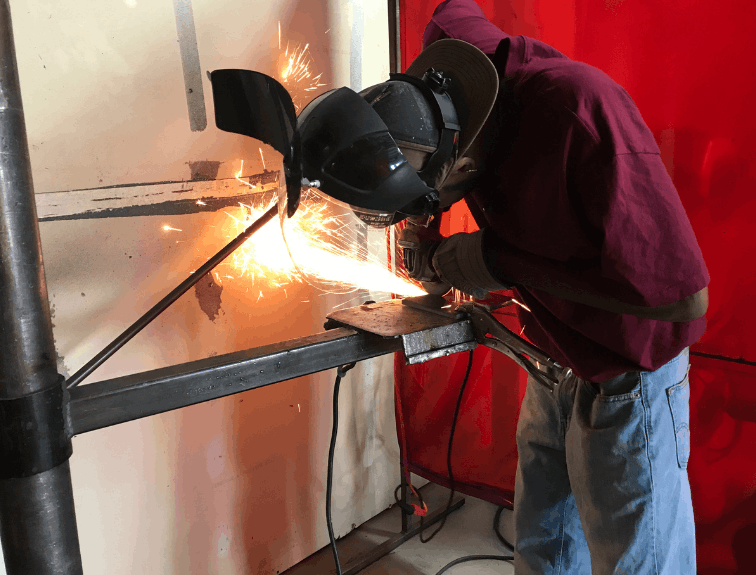
Steps to Get Certified as a Welder in California
Getting certified as a welder in California requires four main steps. Each step gets you closer to credentials that employers recognize and value.1. Have a high school diploma or GED
Start with a high school diploma or GED. Most training programs and apprenticeships throughout California require this basic educational qualification. While welders in California aren’t legally required to have a diploma to work, those without one often struggle to qualify for many trade programs or job opportunities. Employers look for candidates with this baseline education since it shows critical thinking abilities and discipline.2. Enroll in a welding training program
Next, you need formal training. California offers several paths” Trade schools like Advanced Career Institute provide programs lasting 9-10 months where students learn four primary welding types:- Gas metal arc welding
- Shielding metal arc welding
- Gas tungsten arc welding
- Flux-cored arc welding
3. Choose your welding process ad test type
Your certification path depends on where you want to work. Options include structural steel, petroleum pipelines, sheet metal, or chemical refinery welding industries. Common tests will follow the standard welding codes that we mentioned earlier regarding:- structural steel
- pressure vessels
- oil and gas pipelines
4. Pass a performance test at an accredited facility
The final step involves passing a performance-based test at an AWS. Accredited Testing Facility (ATF). During this test, you demonstrate their abilities by depositing a sound weld inspected by an AWS Certified Welding Inspector. Test prices range from $499 to $899, plus AWS application fees. Once you pass, you receive transferable credentials recognized throughout the industry. No prerequisite certifications are required – if you can perform the weld successfully, you qualify.Welder Training Programs Explained
Aspiring welders in California can choose between different training paths. Each option has distinct advantages based on your situation and career goals.How long does it take to become a certified welder?
Fast-track programs at institutions like Advanced Career Institute can be completed in less than a year. Some colleges offer certifications through 5-week course segments.What to expect in hands-on programs
Programs focus on practical application alongside theory. Students learn multiple welding process, including:- SMAW (stick)
- GMAW (MIG)
- GTAW (TIG)
- FCAW (flux-core)
What Jobs Can I Get as a Welder?
Once you earn certifications, welders in California can find opportunities across multiple industries with solid pay scales and room for advancement.Entry-level welding jobs and average salaries
Entry-level certified welders typically start in positions as:- Welder
- Fabrication welder
- Welder fitter
- Wirer
Industries hiring certified welders in California
Certified welders can find work in numerous sectors throughout the state:- Oil refineries and pipeline construction
- Nuclear power plants and power generation
- Aerospace and manufacturing
- Structural building and bridge construction
- Automotive industry
- Commercial fabricating jobs
Advanced roles and specialization options
Experienced welders have several paths for career advancement:- Certified welding inspector (CWI)
- Quality control inspector
- Welding project manager
- Welding shop supervisor
- Welding sales representative
- Welding shop owner
Maintaining certification and continuity logs
Welders must document continuous practice through continuity logs to keep their certification valid. For AWS D1.1 structural steel certification (using SMAQ, FCAW, or GMAW) welders must prove continuous welding without breaks exceeding 6 months. Sheet metal welders certified under AWS D9.1 (using GTAW or GMAW) must document continuous practice without breaks exceeding 12 months. Failure to maintain continuity requires recertification, costing approximately $500 per process. Most employers and unions maintain records for their welders. Self-employed welders must track their own continuity documentation. Welding certification offers a practical path to stable, well-paying careers in California. This guide covers the key steps: California relies on industry-recognized certifications like AWS D1.1, ASME IX, and API 1104 rather than state licenses. These certifications prove your skills with specific welding processes and positions. The certification process starts with a high school diploma or GED. Then you choose between trade schools (as short as 9 months) or a longer apprenticeship. Fast-track programs work well for people ready to start working quickly. You pick your welding process based on your career goals, then pass performance tests at accredited facilities. The money makes sense. Entry-level positions start around $20 per hour with benefits. Experienced welders with specialized skills earn much more. The industry offers advancement opportunities across oil and gas, aerospace, manufacturing, and construction sectors. Welding certification opens doors to career stability and growth. The projected national employment exceeding 437,000 welders by 2032 shows strong demand for skilled workers. People considering this career path can expect their training investment to pay off long-term. Welding offers immediate job opportunities plus room for professional growth through additional certifications and specializations.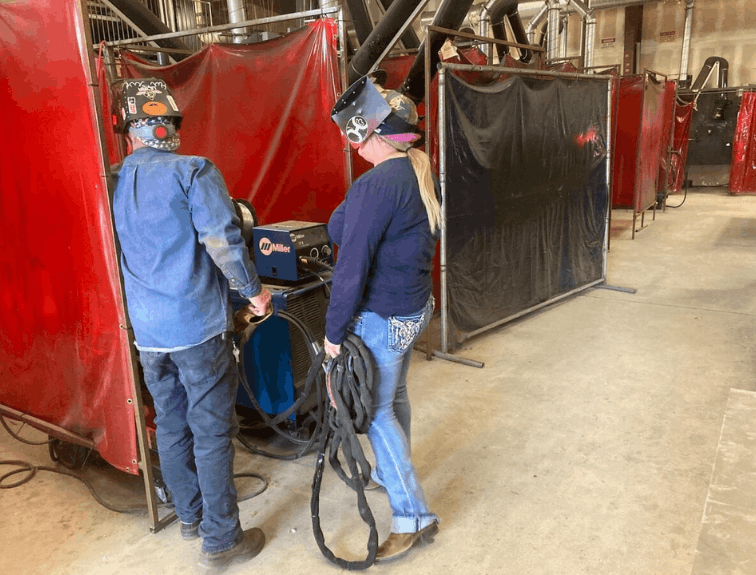
FAQs
How long does it typically take to become certified welder in California?
The duration can vary, but fast-track programs at trade schools can be completed in as little as 9 months.Is a state-issued welding license required to work as a welder in California?
No, California does not issue a state welding license. Instead, the state relies on industry-recognized certifications to validate welder skills.What are the common welding certifications recognized in California?
The three primary welding codes widely recognized in California are:- AWS D1.1 – for structural steel welding
- ASME Section IX – for pressure vessels
- API 1104 – for oil and gas pipelines
What is the average salary for certified welders in California?
The average salary for entry-level welders in California is $21 an hour with benefits, while experienced professionals can earn significantly more.How do I maintain my welding certification in California?
To maintain certification validity, welders must document continuous practice through continuity logs. They need to show proof of continuous work without breaks exceeding 6 months. Apply for Welding Training Now. Fast-track to certification in less than a year. -

Learn What Industries Offer Opportunities for a Successful Welding Career
Welding is a critical skill that supports a wide range of industries, from construction and manufacturing to aerospace and energy. Without skilled welders, essential structures, machinery, and transportation systems wouldn’t be possible. As industries continue to grow and evolve, the demand for trained welders remains strong, offering countless career opportunities for those with the right skills. In this blog, we’ll explore the industries that rely on welders, highlighting the vital role they play and the exciting career paths available in this essential trade.Why Welding Is an Essential Skill Across Industries
Welding jobs are a fundamental trade that serves as the backbone of countless industries, making it one of the most versatile and in-demand skills in the workforce. From towering skyscrapers and massive bridges to intricate aerospace components and high-performance vehicles, welding is responsible for creating and maintaining the structures and equipment that keep the world moving. Beyond construction and manufacturing, welders play a crucial role in emerging industries like renewable energy and advanced technology, ensuring innovation and progress continue. With advancements in automation and specialized welding techniques, the need for skilled welders is only growing, offering job security and career advancement opportunities across a variety of fields.Industries That Rely on Welders
1. Construction and Infrastructure
The construction industry depends heavily on welders to create and maintain buildings, bridges, and other essential infrastructure. Welders work on steel frameworks, reinforce concrete structures, and ensure the stability of high-rise buildings. Public infrastructure, such as highways, tunnels, and pipelines, also requires skilled welders to maintain and repair metal components. As cities expand and new projects develop, welders remain at the forefront of this industry.2. Manufacturing and Fabrication
Manufacturing is one of the largest industries for welders, offering employment in factories that produce everything from household appliances to industrial machinery. Welders work with metal components to assemble products, reinforce materials, and ensure durability. Many modern manufacturing facilities use automated welding processes, but skilled welders are still needed to oversee production, inspect welds, and handle intricate tasks that machines cannot perform.3. Automotive and Transportation
Welders play a significant role in the automotive industry, helping to build and repair cars, trucks, and even public transportation systems like buses and trains. Every vehicle contains welded components that contribute to its safety and efficiency. Welders also work on custom automotive projects, such as race cars and specialty vehicles, creating high-performance frames and exhaust systems. With the rise of electric and autonomous vehicles, the demand for specialized welding skills in this field is increasing.4. Aerospace and Aviation
Precision welding is crucial in the aerospace industry, where aircraft and spacecraft require strong, lightweight, and durable materials. Aerospace welders work on airplane fuselages, jet engines, and satellite components, using advanced techniques like TIG welding and laser welding to ensure structural integrity. The high standards and safety regulations in aerospace welding make this a challenging but rewarding career path.5. Shipbuilding and Maritime Industry
The maritime industry depends on welders to build and repair ships, submarines, and offshore drilling platforms. These structures must withstand extreme weather conditions and the constant wear of saltwater exposure. Some welders in this field specialize in underwater welding, a highly skilled and high-paying profession that involves working in submerged environments to repair ship hulls, pipelines, and offshore structures.6. Energy and Power Generation
Welding is essential in the energy sector, helping to construct and maintain pipelines, power plants, and renewable energy systems. In the oil and gas industry, pipeline welders work in challenging environments to ensure the safe transportation of fuel. Meanwhile, the renewable energy sector relies on welders to build wind turbine towers, solar panel structures, and hydroelectric power facilities. As the world shifts toward sustainable energy, welders will continue to play a crucial role in shaping the future of power generation.7. Agriculture and Heavy Equipment
Farms and agricultural businesses rely on welders to repair and maintain heavy machinery, including tractors, plows, and irrigation systems. Welding is used to build sturdy equipment that can endure rough conditions and heavy use. Skilled welders in this industry ensure that farmers and construction workers have the durable tools they need to operate efficiently.8. Military and Defense
The military relies on welders to build and maintain vehicles, ships, aircraft, and infrastructure used in national defense. Military welders may work on armored vehicles, aircraft carriers, or even weapons systems, ensuring they meet strict durability and performance standards. Some welders in this industry work directly for government agencies, while others are employed by defense contractors.How to Get Started in Welding for These Industries
For those interested in a welding career, proper training and certifications are essential. Many industries require specialized welding skills, so gaining hands-on experience and obtaining certifications from organizations can open doors to high-paying opportunities. Enrolling in a welding training program, such as the one offered at Advanced Career Institute, can help aspiring welders build a strong foundation and gain the technical knowledge needed to succeed in various industries.Why Welding Is a Strong Career Choice
Welding jobs offer security, career advancement, and excellent earning potential. As industries continue to expand and evolve, the demand for skilled welders remains steady. Whether working on massive infrastructure projects, high-tech aerospace components, or cutting-edge renewable energy systems, welders have the opportunity to build a fulfilling career in a field that keeps the world running. From construction and manufacturing to aerospace and energy, skilled welders are needed in nearly every industry. Welding jobs provide stability, diverse career paths, and opportunities for professional growth. If you're considering a hands-on career with strong earning potential, welding could be the perfect choice for you.Start your welding journey today with Advanced Career Institute and gain the skills needed to work in these essential industries!