RESOURCES

Helpful Information About Potential Welding Careers & Trucking Jobs

Check out this selection of articles below to learn more about career choices and how to prepare for in-demand job opportunities.

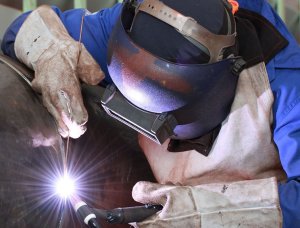
  • image of person welding

    Traits Needed to Become a Welder

    You may be wondering, what does a welder do? The job description of a welder is complex and challenging. However, this creates an exciting and rewarding lifestyle! No day of work as a professional welder is the same. Sometimes welders will spend the day cutting, shaping, and combining materials to make different parts for a variety of industries. Some of these may include the construction, engineering, automobile, or aerospace fields. Whichever field you choose, the tasks tend to be similar across the board. In general, welders pick the materials to join or cut, and arrange them in an appropriate configuration. Then, they follow a specific design or blueprint to create the desired product. Sometimes a welder has to perform certain melting methods on materials like lead bars to complete a project. Welders are also in charge of fixing structural repairs and making sure the welding equipment is in great shape. Continue reading to learn what it takes to become a welder.

    What Materials Do Welders Use?

    Several different types of materials are used on a daily basis including composite material, alloys, or metals. Some welders who choose to take a more specific route work with complex laser or ultrasound welding equipment. Keep in mind, though, that a career in welding will sometimes require working with dangerous tools in high-risk environments. Getting in the habit of wearing the appropriate protective gear is an absolute necessity.

    What Skills Do I Need to Become a Welder?

    A great welder usually has the ability to remain very detailed and focused at all times. They should also be very familiar with the latest welding tools and methods. In addition, it's helpful to have a vast amount of knowledge of different welding design techniques and equipment preferences. Welding also requires someone with a confident building and construction ability to ensure effective repair and equipment maintenance. A person with excellent construction skills usually has a very logical mind and excels in problem-solving situations. A well-rounded mathematics understanding is a valuable trait for welders to have. It isn’t necessarily a requirement for the job, but is attractive to employers looking to hire a welder to perform many different tasks on the job site.

    What Kind of Training Do I Need to Work as a Welder?

    Every welding job requires at least a general certification in welding. Welding programs are created to teach students the basic skills and procedures needed to work as a professional. Every school offers a different mix of cutting techniques and materials. One of the most important things to take away from a welding program is the industry’s safety guidelines and methods as well as blueprint reading. A welding program that enforces a good amount of hands-on training will prove most beneficial for welding student’s future. At Advanced Career Institute, we provide Welding Training for entry-level welders. No experience is required before beginning your training. Our goal is to help you master the skills needed to perform proficiently in your new career.   Do you still have questions about a career in welding or welding training? Contact us and an ACI representative will be happy to answer all of your questions. Advanced Career Institute wants to help you get started on the path to a stable career with lots of rewards. Reach out today!
  • Image of man sitting in drivers seat of truck

    Making it Through Your CDL Training

    Going back to school for continuing education midway through your career is never an easy decision, but it can provide benefits that will stay with you for the rest of your career in that industry. The same can get said for going back to CDL school to help you start a new career. The following are several tips to help you make the most of your CDL training as you start a new career and take part in training for your job as a truck driver...

    Have a Mind Open to Learning

    When you go back to school to get your CDL, it can be challenging, but it needs to get done with an open mind. You will learn lots of new things for the first time. While it might seem overwhelming, in the end, taking the information you learn to apply to your career is what will help you pass your CDL test.

    Be Coachable

    Being coachable means that you take the information that you learn and you use it to help you advance in your new career. Everything you get taught at ACI is to help prepare you for the road ahead (no pun intended) and to become a safe and cautious driver. Learn and improve your skills and you will become a better employee and a more hireable candidate.

    Come with Optimism & A Positive Attitude

    Coming in with a positive attitude and an open mind rather than being pessimistic and unopened to change will help you make the most out of the education. Everyone at Advanced Career Institute wants the very best for you and to see you succeed.

    Learn From Constructive Criticism

    Constructive criticism is part of any sort of learning and career training. When our teachers and mentors give you criticism, they never mean to insult or belittle you, but rather are there to teach you the industry standards and how to do your job more effectively. Take the critical thinking in the mindset that they want you to succeed and do whatever you can to help yourself learn the skills needed for the job.

    Avoid Putting Mentors/Instructors Down

    The instructors at the Advanced Career Institute care about you not only as a student who is paying to get an education but for you as an individual who wants to improve your life and make a better living. Returning that respect and working with our instructors will only help you be better at your new job. It will also help you have a better learning experience along the way.

    Believe In Yourself

    The amount of information you learn while in school training for your CDL can be very overwhelming. Taking in the information can seem challenging. Believe in yourself and your ability to understand what you are learning. You can remember this information and make a better life for yourself moving forward with trucking as your new career.   These are just some traits that will help you succeed in earning your Commercial Driver's License. ACI is here to help you get through the learning process that is part of becoming a full-time truck driver. For further assistance or to come in and speak to us, please contact us today.
  • Image of nurse checking patient heart rate

    What to Know About The DOT Exam

    There are a variety of steps to take in order to become a professional truck driver. One step is to pass the DOT Physical Exam. The DOT Physical Exam is an examination that all truck drivers must take and pass to get their Commercial Driver’s License. This exam determines if the driver meets certain health standards set by the Federal Motor Carrier Safety Administration (FMCSA) in order to be eligible to drive. Continue reading to learn more about the DOT Exam!

    What Is the DOT Exam?

    All truck drivers are required by law to pass the DOT Physical Exam before getting behind the wheel of a big rig. The FMCSA has set a variety of mental and physical health regulations that truckers must meet in order to fulfill the demands of a truck driving career. All professional truck drivers must hold an up-to-date physical certification at all times. Typically, drivers are required to get physicals every 1-2 years. It is important to meet the standards of the DOT physical to ensure both the truck driver’s safety on the road as well as the safety of other motorists. All candidates are asked to fill out all health questionnaires before they arrive at the office. If drivers have any of the following conditions they need to bring the following with them to the exam:
    • Drivers who have vision or hearing problems must bring either their glasses/contacts or hearing aids with them to the exam.
    • Potential drivers with diabetes must bring their most recent and comprehensive Hemoglobin A1C (HbA1C) results and blood sugar logs with them.
    • Drivers with heart-related issues must bring a letter from their cardiologist outlining the issues and limitations that the driver has as well as along with a note that they are safe to perform this kind of work.
    If a driver comes without these specific papers, yet has one of these conditions, the exam will not be able to be passed until the appropriate items are brought in.

    What Can I Expect During the DOT Exam?

    In addition to the necessary checks mentioned above, the DOT Physical Exam will also look for a variety of other conditions that a driving candidate may have. These will include the following:
    • General Appearance
    • Eyes (i.e., cataracts, glaucoma, muscular degeneration, etc.)
    • Ears (i.e., scarring of the tympanic membrane, perforated eardrums, etc.)
    • Mouth/Throat Exam (issues swallowing)
    • Heart (to detect problems)
    • Lungs & Chest
    • Abdominal Issues
    • Vascular Issues
    • Genito-Urinary Issues
    • Extremities
    • Possible Spinal Injuries
    • Neurological Issues
    These are just some of the issues that get looked at within the exam. The idea behind the DOT Physical Exam is to give prospective drivers a comprehensive physical to ensure that the driver is fit and healthy before beginning their driving career.

    What Happens if I Fail?

    A candidate will fail the exam if they have the following:
    • Cardiovascular/Respiratory Disease
    • High Blood Pressure (without medication)
    • Epilepsy
    • Diabetes
    • Nervous/Psychiatric Disorder
    • Poor Eyesight (without corrective lenses)
    • Loss of one/multiple limbs
    Candidates will also fail if they do not pass the alcohol or drug test that accompanies the rest of their physical. Failing the DOT Exam does not necessarily mean that you are incapable of driving a truck. If you have a condition that can be treated, consult your doctor for further treatment. If your condition has improved, consider taking the exam again. Additionally, the FMCSA offers exemptions for certain impairments. Refer to your doctor to see if you qualify. Are you considering a career as a professional truck driver? Advanced Career Institute offers hands-on training to earn your Class A CDL. ACI campuses are located in Merced, Fresno, Bakersfield, and Visalia. To learn more about truck driver training, head over to our Class A CDL Training Program!
  • image of student using the truck driving simulator

    A New Addition to CDL Training

    Trucking schools have turned to new technology! Advanced Career Institute's Fresno Campus has added a trucking simulator to help their drivers learn to drive before hitting the road. This trucking simulator allows students to get the general feel and experience of driving behind the wheel of a "big-rig" before they set foot inside a real truck. This new technology has become a great resource to add to our CDL training.

    What Do Trucking Simulators Do?

    Trucking simulators allow students to experience what it's like to drive a "big rig" truck without even leaving the classroom! Our simulator is complete with the steering system and on-screen display to learn the basic skills of truck driving. Skills learned within a simulator include:
    • backing
    • sightline views from the driver's seat
    • how the clutch works
    • driving in various weather conditions (i.e. ice, snow, sleet, freezing rain, rain, wind, etc.)
    Once these skills (and many others like them) are learned, the student will be much more prepared to take on driving in an actual truck. Students will then commence the "road training" portion of their program, which further reviews the basic driving skills needed to pass their CDL test.

    Truck Simulators - Part of Our Curriculum:

    Trucking simulators have become a core part of our driver training program here at our Fresno Campus. It has become an effective tool in teaching our drivers the basics of operating a truck before getting behind the wheel of a truck for the first time. This new technology of truck simulators provides students with a diverse set of scenarios a trucker may see while driving. This can also help increase a student's chances of passing their CDL test the first time. Simulators are a tool that we are excited to continue to use at ACI. Our goal is to continue to provide the best possible training for each student. As technologies continue to advance, these simulators become more lifelike and give students a better experience of learning to drive a truck.

    Come By & Visit Our Training Center:

    If you are interested in seeing what our driving simulator looks like and the kind of technology we invest here at the Advanced Career Institute, please feel free to stop by. We are happy to show you our simulator as well as discuss your truck driver training options. For further assistance, please feel free to contact us. We look forward to seeing and meeting you soon!
  • Image of white blueprints, wrenches and plumbing parts on top

    Which Welding Career Path is Best for You?

    People who get into welding are those who love to work with their hands and are not afraid to get dirty while doing it. Welders take pride in their job and want to do their best at every project they take on. When started a career in welding, are a variety of job options for those who have completed their degree and are looking for work. The following are seven welding careers you may not have thought of:

    Assemblers and Fabricators:

    These individuals work to put the finishing touches on a variety of consumer goods that we purchase in our daily lives. They use their welding skills to help finish making items such as toys, electronic devices, and computers. Assemblers and Fabricators also work on other vital pieces of our country's infrastructure such as modes of transportation. They help build forms of transportation such as aircraft, ships, and boats.

    Boilermakers:

    Boilermakers produce steel fabrications such from plates and tubes. Originally, boilermakers created boilers, although today they develop a variety of different technologies including bridges, blast makers, and other mining equipment. Many of these welders travel to the worksite to do their work. This line of work may mean some regional or national traveling to perform their welding on the structures that need to be worked on.

    Jeweler, Precious Stone, and Metal Workers:

    Many welders that work in the jewelry field spend their days at a small bench hunched over a specific piece of jewelry that they are working to repair. Most jewelry that they work on will be higher-cost pieces that include precious stones and metals such as gold. The goal is to get the piece close to original condition as possible to get the value of the piece as high as possible.

    Machinists, Tool, and Die Makers:

    These welders work on welding pieces of machines or tools that get used in a variety of different fields including transportation (i.e., automobiles, trucks, buses, aircraft, planes, or boats) or the construction industry (such as welding and finishing off construction tools). This sect of welders often has to work nights and weekends to get their jobs completed on a strict timeline for other automotive or construction projects to be able to move forward on their set schedules.

    Sheet Metal Workers:

    Sheet Metal Workers are welders who are responsible for welding sheets of metal together to create finished products. Most sheet metal workers work to generate heating and air conditioning systems which require these sheets of metal to be welded together to produce these units for both commercial and residential buildings. Sheet metal will often get heavy, and the structures that these welders work on become very sizable. Heavy lifting and moving large, finished pieces of work are all part of the job.

    Plumbers, Pipefitters, and Steamfitters:

    These welders work primarily in the construction industry to help work on building projects that are still getting completed. They often work on plumbing and pipefitting in both commercial and residential buildings. Their jobs are to ensure that the plumbing, piping, and ductwork in buildings is up to the building code and safety standards outlined in that area. These workers will have to travel to the construction site to perform their work. Deadlines are also standard in this field of welding as the plumbing and pipefitting must get finished before the next phase of construction can begin.

    Metal and Plastic Machine Workers:

    Metal and Plastic Machine Workers are welders who set up and operate machines that are responsible for cutting, shaping and producing both metal and plastic pieces that get used in the construction of a variety of goods that get created in our modern, consumer society. These products are often required to get built to certain safety standards set forth by the industry for which the product is getting designed.   There is a variety of options for welders when it comes to choosing a long-term career. Dream big and find a career that fits your desires and needs as a welder! In the end, it will make work a pleasure, and not a chore as the options in the welding field are genuinely endless. For further information on Advanced Career Institute's Welding Training, contact us today!
    *This blog was originally written in 2016 and has been updated according to industry standards.
  • image of semi trucks lined up next to each other, "text that reads 2019 Industry Outlook for the Trucking Industry" in the top left corner

    Checking Truck Driving Industry Outlook

    As we close in on the year 2019, we are looking ahead to see what the new year holds for the trucking industry. Overall, the trucking industry can expect the coming year to be very positive. Consumer demand is slated to grow modestly and there are plenty of job vacancies for people who want to go to school to get their CDL and get into driving careers. The positive outlook on the industry is believed to extend even beyond 2019 according to many experts.

    Consumer Demand Continues to Climb

    As we head into 2019, the overall consumer demand in the US is predicted to climb another 3-4% as the economy continues to recover from the 2008 financial crisis. Considering that about 70% of all consumer goods that travel throughout the US do so by truck, that means that there will be plenty of work for truck drivers. This promotes job security for those already in the industry and opportunities for those looking to join the industry.

    There Are Trucking Jobs to Fill

    The trucking industry has ~52,000 job vacancies throughout the US with more scheduled to become available throughout 2019. The vast amount of open jobs in the industry means that there are job opportunities for everyone no matter where you may live. Job security once you earn your CDL is strong. The trucking industry is growing at a rapid rate and needing more drivers than ever just to meet consumer demand.

    Automatic Trucks Will Not Be Taking Jobs Away From Drivers Any Time Soon

    Automatic trucks are not going to be a threat to truck driver's job security any time in the near future. While these trucks are being developed, they are only in their "infancy" stages of development. The first models are very unlikely to be able to drive themselves completely. Drivers will still have to do the more challenging maneuvers such as backing in and out of tight spaces or entering and exiting busy highways or interstates manually. It is likely to be a couple of generations or more of truck drivers that come and go before automatic trucks are even a remote possibility of being a reality. This means that drivers jobs are safe.

    Truck Drivers are Bringing Home the Bacon

    Truck drivers are in high demand and they generally have a fairly high standard of living. Most truck drivers will begin as OTR drivers that make an average of $45,000+ per year. This is comparable or higher than many other jobs that require a college education. In addition to a modest starting salary, most companies offer drivers a few weeks of paid vacation each year, complete health benefits, and retirement benefits as well. Many large truck carriers are also willing to help a driver pay back their student debt or loans. Some offer $100 to $400 per month, above and beyond their regular wages and compensation, to pay back debts.

    Beginning a New Career

    As the industry has many job vacancies and a steadily increasing consumer demand, now is a great time to get your CDL license. The New Year is a great time to get started in a great new career. For more information on starting classes and getting your CDL contact Advanced Career Institute for further assistance.
X