
The question comes up often: with automation, a changing economy, and shifting job markets, is truck driving still worth it as a career? The short answer is yes. Here is what the numbers actually show.
Trucking is not just holding on in 2026. In several real ways, conditions for new drivers are getting better. Companies are working harder to hire and keep qualified drivers. Pay packages are improving. And the technology coming into modern trucks is making the job safer and easier to manage. For someone thinking about a career change or a first career, now is the best time to get in.
There is Strong, Consistent Demand for Qualified Drivers
One of the best reasons to enter trucking right now is simple: the industry needs drivers, and that need is not going away.
The Bureau of Labor Statistics projects about 237,600 job openings for heavy truck drivers every year through 2034. Most of those openings come from retirements and turnover. A driver who earns a CDL today is stepping into a market with a steady, documented need for qualified people.
The American Trucking Associations projects a shortage of roughly 82,000 drivers by end of 2026, with that number expected to grow past 160,000 by 2031 if hiring trends do not change. A large share of those openings exist because turnover at major carriers has historically run above 90 percent per year. That is not a sign of a bad industry. It is the reason carriers have started competing harder for drivers who stay, investing in better pay, better equipment, and better working conditions to keep them.
Pay Is Competitive, and Getting Better
The median pay for heavy and tractor-trailer truck drivers was $57,440 per year as of May 2024, according to the BLS. The bottom 10 percent earned less than $38,640. The top 10 percent earned more than $78,800.
Most first-year drivers earn between $50,000 and $60,000 per year. That range moves up quickly with experience, clean safety records, and added endorsements.
Pay is also changing in other ways. Many carriers are moving away from paying only by the mile. In 2026, more companies are building pay packages that include bonuses for safety, performance, and retention. Health coverage and retirement benefits are becoming more common too. This shift is a direct result of companies competing for qualified drivers.
Drivers who earn extra endorsements, such as hazmat, tanker, or flatbed, can move into higher-paying freight. With experience and the right endorsements, over-the-road drivers at strong carriers often earn between $65,000 and $90,000 per year. Some specialized positions, typically reached after several years on the road, go above $100,000.
Technology Is Improving the Job, Not Eliminating It
A lot of people thinking about trucking in 2026 want to know one thing: will self-driving trucks take this job away? The data says no, at least not soon.
Research shows that heavy truck drivers have just 10 percent AI exposure. That is one of the lowest rates among all 500 job types studied. And as of 2026, no state allows fully driverless commercial trucks on all road types.
What technology is doing is making the job better. Modern trucks now come with driver assistance tools that reduce fatigue and improve safety. Better cab designs make long shifts more comfortable. These tools help drivers do their job. They do not replace them.
Trucking is also much more than driving. Drivers secure loads, work with warehouse staff, manage paperwork, and handle problems on the road. Those tasks need human judgment and physical skill. Current automation cannot handle the full range of situations a driver faces every day.
Carriers Are Working Harder to Keep Drivers
High turnover has pushed carriers to rethink how they treat drivers. Replacing a driver costs far more than keeping one, and companies have started to act on that math.
In 2026, more carriers are investing in driver well-being. That means better equipment, more predictable schedules, and clearer pay structures. Many are also making pay easier to understand, which was a long-standing frustration in the industry. For a new driver, this matters. A company that is focused on keeping drivers is more likely to support new hires, offer real onboarding, and provide a clear path to better pay over time.
The Career Path Has Real Room to Grow
Trucking is not one job. It is a career with real room to grow. A driver who starts on a local route can move into regional or long-haul driving for higher pay. Extra endorsements open the door to tanker, flatbed, refrigerated, and hazmat freight, all of which pay more. Experienced drivers can also move into dispatch, training, fleet management, or run their own operation as an owner-operator.
The workforce is also more diverse than most people expect. Women now make up about 14 percent of all truck drivers as of 2025. That number has been growing as more carriers actively recruit women into the profession.
Veterans, career changers, and people who do not want a four-year degree are all well-represented in trucking. A CDL takes weeks to earn, not years. Financial help is available at many accredited programs, including grants, scholarships, and veterans benefits.
What Does Getting Started Actually Look Like?
In California and most other states, new CDL applicants must finish Entry-Level Driver Training through an FMCSA-registered school before taking their skills test. This is a federal rule. It means the CDL earned today comes with real, documented training behind it.
Most CDL programs take three to seven weeks. They include classroom instruction and time behind the wheel of a commercial vehicle. Many schools also offer job placement help after graduation, connecting new drivers with carriers that are actively hiring.
Frequently Asked Questions
Will self-driving trucks take over trucking jobs soon?
No, not in the near term. As of 2026, no state allows fully driverless commercial trucks on all road types. Research also puts truck drivers among the jobs with the lowest AI exposure, at just 10 percent.
Can truck drivers earn six figures?
Yes, though not right away. Experienced over-the-road drivers and those with specialized endorsements regularly earn $65,000 to $90,000 per year. Some specialized freight positions go above $100,000.
Is trucking a good career without a college degree?
Yes. A Class A CDL is a vocational credential earned in weeks. It qualifies drivers for jobs with a median wage of $57,440 per year, and the career offers real room to grow through endorsements and leadership roles.
Is trucking a good career for women?
Yes. About 14 percent of truck drivers are women as of 2025, and that number is growing. Many carriers actively recruit women and offer programs to support them in the field.
About Advanced Career Institute
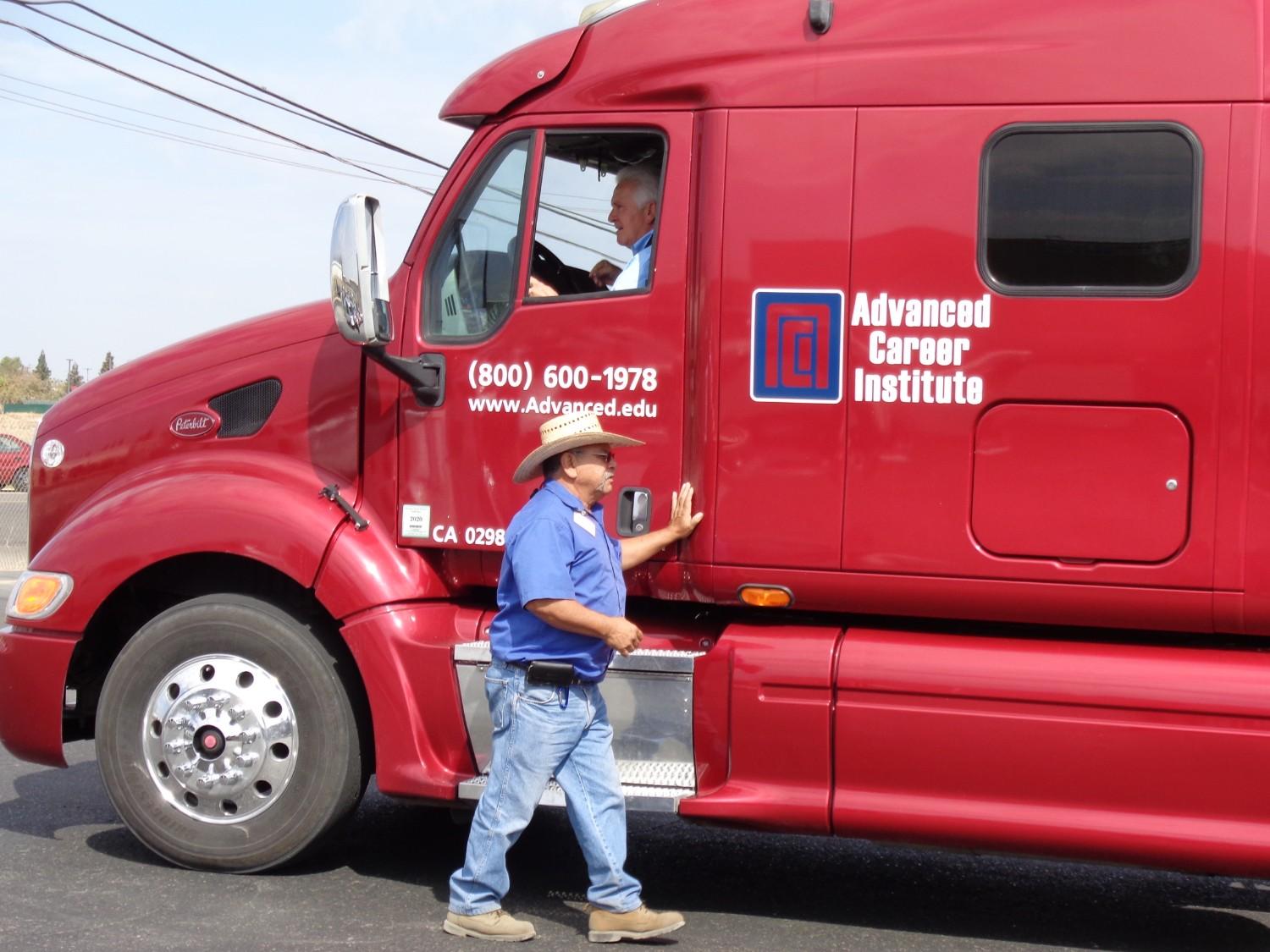
Advanced Career Institute offers Class A CDL training at campus locations in Visalia, Fresno, Merced, and Las Vegas. Tuition assistance and career placement support are available. Contact ACI to learn more about enrollment and program options.
Sources Referenced
- S. Bureau of Labor Statistics, Occupational Outlook Handbook: Heavy and Tractor-Trailer Truck Drivers (May 2024) — www.bls.gov/ooh/transportation-and-material-moving/heavy-and-tractor-trailer-truck-drivers.htm
- Geotab, “Truck Driver Salary: 2025 Guide to Pay by State and Job Type” — geotab.com/blog/truck-driver-salary/
- Drive My Way, “Pay Trends for 2026 That Drivers Need to Know” (February 2026) — drivemyway.com/blog/pay-trends-for-2026-that-drivers-need-to-know/
- AI Changing Work, “Will AI Replace Truck Drivers? 2026 Data” (March 2026) — work/en/blog/will-ai-replace-truck-drivers
- America 1 Logistics, “Top Priorities for Truck Drivers in 2026: Safety, Pay, and Tech” (December 2025) — america1logistics.com/post/top-priorities-for-truck-drivers-in-2026-safety-pay-and-tech
- Linxup, “Trucking Industry Statistics” (October 2025) — linxup.com/blog/trucking-industry-statistics
- TransAm Carriers, “Trucking Prospects 2026: What Lies Ahead for the Industry” (January 2026) — transamcarriers.com/trucking-prospects-2026/
- FMCSA, Entry-Level Driver Training requirements — fmcsa.dot.gov/registration/training-providers
- Peak Transport, “Truck Driver Shortage 2026: What It Really Means for Job Seekers” peaktransport.co/blog/truck-driver-shortage-2026
- CDL Schools USA, “How Much Do New Truck Drivers Actually Make in 2026?” https://cdlschoolsusa.com/blog/cdl-first-year-salary-2026-reality-check