
Key Takeaways
Getting started in IT support does not take as long as most people think. Here is what matters most for anyone starting out as a help desk technician:
- No degree needed to start. People can land entry-level jobs in as little as 3 months through self-study and certifications. Many employers care more about skills than about where a candidate went to school.
- CompTIA A+ is the certification to earn first. This widely recognized credential appears in more than 200,000 U.S. job listings each year and covers the basic skills employers want most.
- The pay is solid from day one. Entry-level positions pay an average of $48,154 a year, and experienced technicians can earn $76,000 or more. The field will add 220,000 new jobs by 2030.
- Hands-on experience matters more than theory. Three documented projects that show real troubleshooting work can put a candidate ahead of people who only have certifications on paper.
- Networking is a real advantage. 85% of jobs are filled through professional connections. Employee referrals are nine times more likely to lead to a job offer than a cold application.
Help desk technicians are the first people users call when something goes wrong with a computer, program, or network. The job mixes hands-on troubleshooting with customer support, and it is one of the most common entry points into a longer IT career. There are several ways to get trained, including boot camps, certificate programs, and self-study, so people can find a path that fits their schedule and budget.
What Does a Help Desk Technician Do?
Help desk technicians answer support requests by phone, email, chat, or in person, then diagnose and fix hardware, software, and network problems.³ Most of the work runs through a ticketing system like ServiceNow or Zendesk, and technicians also set up new technology, document fixes for a knowledge base, and pass tougher issues up to higher-level support.
The job leans on a mix of technical and people skills. Troubleshooting shows up in 53% of job postings, communication in 45%, and customer service in 43%.⁴ Working knowledge of Windows, macOS, and Linux is standard, and many listings also call for Active Directory, help desk software, and basic network troubleshooting.⁴ ⁵ Just as important is patience: users often call in frustrated, and staying calm while juggling multiple tickets is a daily part of the role.
Educational Pathways to Get Started
There are several ways to break into help desk work, and a four-year college degree is not required for an entry-level job. Some candidates choose to earn a degree instead. Common choices are information technology, computer science, or network administration.⁷ A degree can speed up hiring and sometimes leads to better starting pay, but many employers care more about certifications and hands-on skills, rather than a diploma.¹
Formal Degree Options
About 48% of help desk technicians hold a bachelor’s degree, and 35% have an associate degree.⁸ Degree programs teach the core knowledge this field needs. Common majors include information technology, computer information systems, and network administration.¹ Coursework often covers PC repair and network management. It also covers:
- Operating system setup
- Security
- Desktop troubleshooting
- Customer service
Professional Certificate Programs
Certificate programs work well for people who want focused training without a full degree. Community colleges offer help desk certificates that run 15 to 19 credit hours and are built to prepare students for entry-level support jobs.⁹ ¹⁰ These programs mix online and classroom learning with hands-on practice. Students cover:
- Client operating systems
- Hardware installation
- Software setup
- Problem diagnosis
- Computer security.¹⁰
Most programs also help students prepare for industry certification exams, so they build toward more than one credential at a time.¹⁰
Boot Camps and Training Courses
Boot camps move fast and pack a lot of training into a short time. Live, in-person programs run 3 to 7 days with expert instruction, while self-paced options usually need 15 to 25 hours a week over six months.¹¹ Career-focused programs average 6 to 8 months, though some students finish in as little as seven months.¹² ¹³ These courses include hands-on labs and project work, and they help prepare students for several certifications, including:
- CompTIA A+
- Network+
- Security+ ¹²
How Long Does It Take to Become a Help Desk Technician?
The amount of time it takes to become a Help Desk Technician depends on the route you choose to become certified. Once hired, most technicians feel comfortable in the role after 2 to 3 months, and full confidence usually comes together within the first year.¹⁴
Key Certifications and Credentials
Certifications give employers a clear picture of what a candidate knows, especially when that person does not have much work history yet. This matters more than most people realize. In fact, 79% of HR professionals at medium and large companies consider industry-recognized certifications when they hire.¹⁵
Entry-Level Certifications
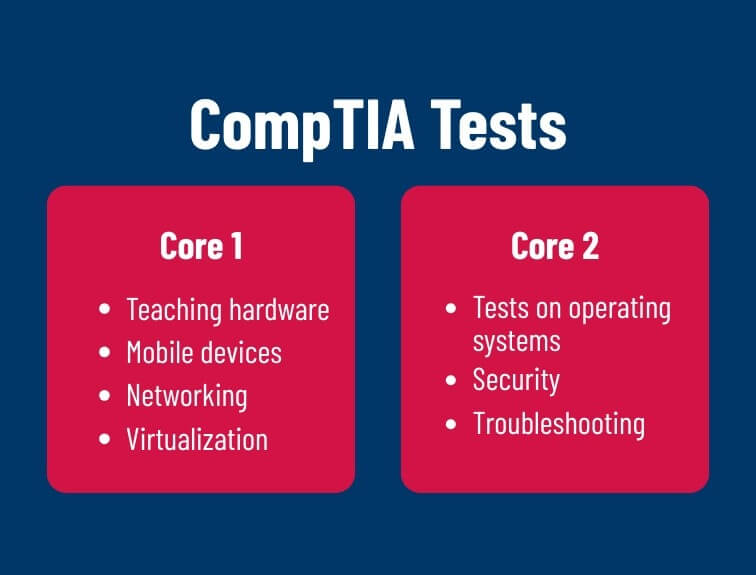
CompTIA A+ is the most recognized starting certification for help desk roles. It is vendor-neutral, which means it works the same way across different employers and industries, not just one company’s products. Earning it means passing two exams. One covers hardware and networking basics, and the other covers operating systems, security, and troubleshooting.¹⁶ Together, they prove the core skills employers want most:
- PC repair
- Network basics
- Technical support
More than 200,000 jobs listed each year in the U.S. require or prefer CompTIA A+.¹⁷
The Google IT Support Professional Certificate is another good option. Instead of one exam, students take five courses. The courses cover:
- Technical support basics
- Networking
- Operating systems
- System administration
- Security ¹⁸
The Google IT Certification fits people who like a structured course format better than exam prep alone.
Advanced Certifications
After earning an A+, CompTIA Network+ is a natural next step. It proves a person’s ability to design, set up, and troubleshoot networks. CompTIA Security+ goes further into threats, weaknesses, and incident response. It is also required for federal contractors and defense-related employers.¹⁹
ITIL (Information Technology Infrastructure Library) Foundation is worth knowing about too. It covers service management practices used by most large companies, including more than 65% of Fortune 500 companies.¹⁹
Certification Costs and Study Time
Certification costs vary by exam and by how someone chooses to prepare, generally landing anywhere from a few hundred dollars for the exam itself to $1,000 or more once prep materials or courses are factored in.¹⁷ ²⁰ Study time varies too, and it depends heavily on the training path. Structured programs tend to move faster and more consistently than self-study.²¹
A Roadmap to Getting Hired
Technical knowledge opens the door, but landing the job takes more than that. Candidates also need hands-on experience, the right connections, and a smart job search plan.
Develop Practical Skills
Hands-on labs are where real learning happens. They build pattern recognition and logical troubleshooting skills. They also build communication under pressure and time management. Employers notice these skills right away. Shadowing skilled coworkers is another good way to pick up new techniques and customer service strategies.²³ Following industry leaders on social media or YouTube can also help candidates stay current on the skills employers want.⁸
Build a Portfolio of Projects
Certifications matter, but they only tell part of the story. Hands-on lab work and documented projects are what set a candidate apart from people who only have credentials on paper.²⁴ Aim for three strong projects that show the tools used, how the problem was solved, and what the outcome was.²⁴ Clear, measurable results carry more weight than general descriptions of skills.²⁴
Network with IT Professionals
Networking fills 85% of jobs, which makes professional connections one of the biggest advantages in a job search.²⁵ Employee referrals are nine times more likely to lead to a job offer,²⁶ and 70% of successful candidates had an inside connection.²⁶ Joining professional groups and attending industry events puts candidates in front of the right people.
Job Search Strategies
Sites like LinkedIn, Indeed, and ZipRecruiter are good places to start looking for entry-level openings.²⁷ Google Career Certificates connect graduates with more than 150 vetted employers.²⁷ Meta certifications connect people with more than 200 companies.²⁷ A resume with the right keywords is more likely to pass the first screening step.²⁷
Salary Expectations and Negotiation
Average annual pay sits at $48,154, and most positions pay between $40,000 and $54,000.²⁸ Top earners bring in around $63,000.²⁸ It is best to wait to negotiate until there is a written offer.²⁹ Candidates should research typical pay in the area first.²⁹ They should also look at the whole pay package, since bonuses and benefits matter too.²⁹
Conclusion
This guide lays out a full roadmap for starting a help desk career. This path offers several training options, strong pay starting around $48,000, and clear room to grow. Candidates can start with certifications like CompTIA A+ and build hands-on experience through labs and projects. Demand for 220,000 technicians by 2030 means steady job opportunities ahead. Building these skills now can lead to a strong new career in IT.
FAQs
What career paths open up after working in help desk?
Common next steps include desktop support and junior systems administrator roles. Other options are network operations center (NOC) engineer or junior network engineer roles. Many technicians move into cybersecurity. Others move into cloud administration or project management.
Is help desk technician a stressful job?
It can be during busy stretches, since technicians often juggle several frustrated users at once. Most say the stress becomes manageable once they build a system for prioritizing tickets.
What is the difference between a help desk technician and an IT support specialist?
The titles are often used interchangeably. Where they differ, “help desk technician” usually refers to entry-level troubleshooting, while “IT support specialist” often covers broader systems work.
Can help desk technicians work remotely?
Yes. Many employers now offer remote or hybrid help desk roles, especially for positions built around ticketing systems and remote-access tools.
What is the difference between Tier 1, Tier 2, and Tier 3 help desk support?
Tier 1 handles basic troubleshooting and ticket intake, Tier 2 handles more complex issues, and Tier 3 involves specialized engineers who resolve the hardest problems. Most technicians start at Tier 1 and move up with experience.
Is on-the-job training required even after earning a certification?
Yes. Certifications cover the fundamentals, but most employers still train new hires on their specific ticketing systems and internal processes.
References
[1] – itcareerfinder.com
[2] – advanced.edu/training-programs/it-professional-training
[3] – comptia.org
[4] – franklin.edu
[5] – auxilion.com
[6] – comptia.org/blog
[7] – indeed.com
[8] – coursera.org
[9] – catalog.tacomacc.edu
[10] – catalog.stlcc.edu
[11] – uh.edu
[12] – scitexas.edu
[13] – newtotraining.com
[14] – reddit.com
[15] – comptia.org/blog
[16] – beyondtrust.com
[17] – dsdt.edu
[18] – tcm-sec.com
[19] – linkedin.com
[20] – ituonline.com
[21] – acilearningtechacademy.com
[22] – auxilion.com
[23] – indeed.com
[24] – artempolynko.com
[25] – mobilocard.com
[26] – wowledge.com
[27] – coursera.org
[28] – ziprecruiter.com
[29] – roberthalf.com
[30] – redhat.com
[31] – alphaconsulting.com