

Welding
Helpful Information About Potential Welding Careers
-
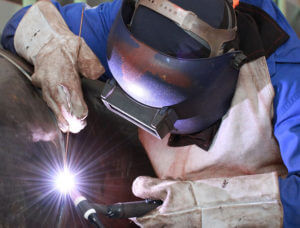
4 Reason to Begin Your Welding Career
April is National Welding Month, and there has never been a better time to consider a career in this industry. Welders play an integral role in such areas as retail infrastructure and home improvement. As automation integrates with the welding field, it creates more opportunity for specialization. The good news is employers are looking for qualified Welding professionals! If you are thinking about changing your career, there are many reasons to investigate and research the welding industry. Let's take a look at 4 undeniable reasons to become a welder:1. Welding is used in many industries
You can find welders in the aerospace, construction, mining, automobile, and shipbuilding industries. As the global economy continues to grow, Welders can rest assured they will have job security and more opportunities.2. Automation will continue to integrate with the Welding field
As technology is used more widely than ever before to improve and streamline processes, Welders will have additional specialization openings. Individuals who transition to this professional field will learn the latest methods of mechanical welding. The materials and processes used will continue to evolve, making it an exciting time to get involved.3. No degree is required to enter the job market
With the rising cost of tuition at colleges and universities nationwide, a career in welding provides students with a greater return on investment. Trainees are ready to work in their field after only 480 training hours. This means having the ability to earn a competitive wage faster than 2-4 years with a college degree.4. The California Welder Program is completed in just 24-weeks
Students are prepared to transition to an entry-level welding position, where they will gain additional practical experience. Skills obtained through training are applied to a variety of growing industries that provide personal and professional growth. Advanced Career Institute offers their training program at two campuses--Visalia and Fresno. It doesn't have to be National Welding Month for you to take control of your career. If you love to design, create and fix things with a variety of materials, Welding may be the perfect next step for you. Contact Advanced Career Institute to begin your career in welding. -
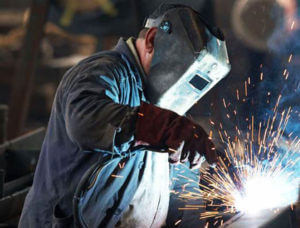
How to Ace Your Welding Interview
Job interviews are always nerve-racking. There's a lot of pressure to perform your very best and show off your skills so that the interviewer shortlists you for the job. Welding, in particular, requires a very specific set of skills, and you need to come prepared for the job interview to show off these skills. Here are four secrets to acing your welding interview so you can land your dream job:Know the Company
The key to any successful job interview is preparation and research. Learn about the company you are interviewing with by taking a look at their website and reviewing their ratings online. Be able to answer basic questions about what the company does and how welding fits into the company's business.Study the Job Description
Find out specifics about the job, such as what type of welding processes you'll be asked to do, by studying the job posting. Make sure you are not only familiar with these processes but also prepared with stories about how you have used these processes in training or at your current or previous welding jobs. Be prepared to answer questions about your training and experience with specific welding processes. For example, be able to answer questions like "What is turnkey integration?" and "What's the difference between MIG and TIG welding?".Rehearse Your Answers
While you won't know exactly what the interviewer is going to ask, it helps to practice your answers to some basic interview questions, such as "Tell me about yourself" or "How do you deal with working under pressure?". With the first question, you have the opportunity to pitch to the interviewer why you are the best candidate. Emphasize your strengths, work ethic, training, experience, and anything else that might be applicable to the job. The interviewer might ask you other questions about your temperament, working with others, and safety habits. Make sure you have strong answers to all of these questions. In addition, prepare some questions for the interviewer about the company and the job to show your interest and preparation.Dress the Part and Bring Your Materials
Come to the interview dressed for the job. Instead of a suit, wear work gear like a long sleeve shirt, heavy-duty pants, and quality work boots. Since you are likely to be tested in your interview, your clothes should be protective and comfortable to work in. Make sure you bring the necessary materials and equipment to do some welding, such as work gloves, a helmet, grinders, weld treatment, and whatever else is necessary for the specific welding processes. While welding is an in-demand skill, you still need to prepare for the interview to increase your chances of landing your dream job. What are you waiting for? Advanced Career Institute is ready to help you get started with your welding career. Contact us today for more information! -
Facts to Know Before You Start Training
Welding is one of the most intimidating trades at first glance, but once you really delve into the facts, it's worth the effort to learn. If you're thinking of beginning training as a welder, there are few key facts to be aware of before stepping into the classroom.Metallurgy: There is Always More to Learn
Metallurgy is the study of metals and their properties which will be what you primarily learn for welding. Due to the existence of over a hundred metals, there are plenty of different welding procedures and processes to learn. These facts alone make having humility as a welder a necessity. Welding as a whole, is constantly changing. Keeping an open mind and willingness to constantly learn will only benefit you in your welding career.Thousands of Job Opportunities
There are always openings for experienced welders, but the only way to gain experience is typically by obtaining a welding certificate. The reason for this is because each job requires a performance test. Within this test, you must showcase your welding skills and knowledge. Since you need to learn all that you can about welding in order to pass any performance test, you'll need to obtain a certificate in a specific type of welding. With a certificate in hand, jobs across the country and around the world become available. Not to mention, your salary becomes boundless. Having so many opportunities at your fingertips makes going without a job even in a recession next to impossible.Don't Be Afraid to Fail
Failure is a part of learning. No matter what knowledge you seek to obtain, you shouldn't expect to be perfect right at the start. A lot of trial and error is required to master any technique. Since you'll never know everything there is to know about welding, failure is something you'll have to accept. While you may be brilliant while in a welding class, being on the job site is a completely different game. Just remember to be consistent. Let your work speak for itself, and keep in mind, if at first you don't succeed, try again. While welding isn't an easy career, it doesn't take as long as other options to gain a certificate. If you're interested in gaining the opportunity to travel, make more money, and learn new information, contact Advanced Career Institute and let us help you get started on a new career in welding. -
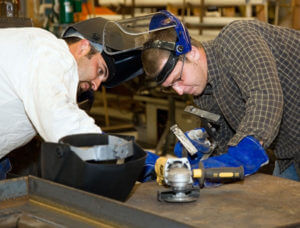
Start the New Year off with a Job You'll Love
Have you been thinking about a career in welding, but want to be sure it's right for you? Have you been looking at educational options, but don't know the right school for you? Advanced Career Institute is ready to be your answer. 2018 is the perfect time for you to begin your welding career journey. Let's take a look at five reasons why you should begin taking the steps to become a professional welder.-
There are jobs in this growing field
According to the Bureau Labor of Statistics, the projected 10 year growth potential is 4% per year. With nearly 400,000 open jobs in welding in the U.S. today, you can rest assured the demand for your new skills will remain high. As more jobs seem to be outsourced and automated, it's comforting to know that welders will continue to serve as a necessary requirement for manufacturing and other industries, across America. -
The starting pay and financial growth opportunities are promising
In California, the average annual salary for a professional welder is close to $40,000.00 per year! As you gain more experience and perfect your trade, you'll have the ability to increase your pay--some welders earn as much as $66,000 or more. -
You enjoy working outside on a full-time basis, and are excited for a challenge
Once you've completed your training and start your first job, you can expect to work 40 hours per week, with possible over-time. Companies are in need of your skills! If you don't love the sunshine and working in outdoor conditions, this probably isn't the right career for you. On the flip side, if you enjoy fresh air, hard work, and the challenge of meeting project deadlines--you're going to love what your new welding job offers. -
Quality training will make you outperform others in the field
Advanced Career Institute offers one of the best programs in California, and has three locations to serve residents. As a welding student with Advanced Career Institute, you'll receive both classroom and hands-on training, and they cater to the non-traditional or working student. If you haven't taken a look at ACI as a potential training provider, it's time to get serious about your future. -
You can complete welding training in as little as 24 weeks
Advanced Career Institute offers two programs designed to get you in your new job in as little time as possible. The Welding Technology program is the shortest program, lasts 24 weeks, and is offered at their Visalia and Fresno campuses. The Advanced Welding Technology program is available at the same campuses, and takes an additional 12 weeks to complete. Shift your career into high gear with welding training.
-
-
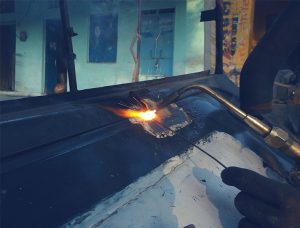
Promising Career Opportunities for Welding Training Graduates
Have you ever dreamed of working for NASA or navigating the ocean floor? A career in welding might just give you the opportunity you’re looking for! Keep reading to learn interesting facts about professional welders.A Variety of Career Paths to Choose From
Welders have the opportunity to choose from a variety of career options. Many welders choose to work in manufacturing or construction. However, professional welders have the chance to work in Underwater Welding, robotics, military support, NASCAR, or NASA. Whether you have a passion for high speed racing or desire to working alongside the military, there is a career in welding for you.Opportunities to Travel
One of the greatest perks of welding is the opportunity to travel to places you may have never been before. Professional welders may work to repair cruise ships or pipe lines, allowing for extended time out at sea and along different coast lines. Additionally, if a welder chooses to work in motor sports, the welder will travel with the pit crew, and have the chance to visit to racetracks in major cities around the country. Lastly, with underwater welding, professional welders have the ability to explore the ocean floor.Welders are in High Demand
The average age of welders is nearly 55 years old. This means that many welders will begin retiring in the next decade or so, opening up many positions for aspiring welders. Additionally, welding techniques are similar amongst most professionals which makes welders very versatile giving them the ability to switch between professions easily. This makes professional welders a hot commodity to employers. According to the Bureau of Labor Statistics, California has the second highest level of employment of welders. This mean that job prospects for welding training graduates looks promising!Short, Affordable Welder Training Programs
A 4-year college degree is not required to become a professional welder. If continued education does not suit your lifestyle, welder training programs may be perfect for you! Advanced Career Institute offers hands-on Welding Training Courses at three California campuses located in Merced, Fresno and Visalia. Welding Training takes anywhere from 24-38 weeks to complete. With the help of ACI, you will be on your way to beginning your new welding career in no time! To learn more about becoming a professional welder, head over to our California Welding Training Page! -
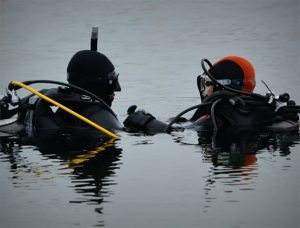
Everything You Need to Know About Underwater Welding
Underwater welding is a dangerous career yet it employs numerous people. Why is this so? Read on to learn more about the pros and cons of underwater welding.What is Underwater Welding & How Does It Work?
Underwater welding has been around since 1932, and is often referred to as hyperbaric welding. It can take place in wet or dry environments. Wet welding is when the welder is entirely submerged in water. The welding is executed using forms of arc welding that employ a waterproof electrode where the welding supply connects to equipment through cables and hoses. Conversely, dry welding is used for high integrity welds. During dry welding, the weld is completed within a sealed pressure chamber that prevents water from entering the work area. They often use a form of gas tungsten arc welding. Dry welding is often used to repair pipelines and ships. Underwater welding research is being conducted at depths of up to 3,300 feet.Why is it dangerous?
My guess is that your first thought about underwater welding was “Electricity and water aren’t a good mix. Isn’t that dangerous?” The answer is…yes! However, many safety precautions are taken to reduce the risk. Underwater welding is completed using a welding stick where a layer of bubbles is created to shield the weld from water. Dry welding is also a safer method since the weld itself is not exposed to water. However, electricity does not pose the biggest threat. Welders operate at high pressures that threaten the body. Additionally, large bubbles created by the weld and the overall dark atmosphere underwater makes it hard to see, and is threatening to the welder. The most notable underwater risk is differential pressure or Delta P. In Delta P, water from one area attempts to rush to fill another. The pressure difference accumulates hundreds of pounds which can draw divers in and make it very hard to escape. Although there is a high risk of Delta P, companies have come up with action plans on how to avoid this fatal occurrence. For more information on Delta P, check out this video.Why do people choose to take these risks?
Many welders choose this career path because it is exciting, peculiar and challenging. Additionally, underwater welders are essential components to industries all over the world. This means that skilled welders are in high demand. Currently, companies do not possess the technology to complete underwater welding tasks without humans. This provides underwater welders with job security. On top of it all, underwater welders have the opportunity to make significant salaries that they would not have access to as a typical welder.The Future of Underwater Welding
According to the Bureau of Labor Statistics, the average salary for an underwater welder is around $53,990 per year or $25.96 per hour. Underwater welder jobs are concentrated in California, Florida, Michigan and Washington. Your career can take place in one of two locations: inland or offshore. Inland welders typically make less than their offshore colleagues. They tend to work on bridges, dams and small water vessels. Although there is less pay involved, you operate on a less demanding schedule (40-hour work weeks) and less travel is required. However, offshore welders tend to bring in the big bucks. They work on oil rigs and large ships. In this job, you may spend a significant time out at sea and can expect to long work weeks, even up to 80 hours! Interested in becoming an underwater welder? The first step is to get your welding certification. Advanced Career Institute offers hands-on welder training in the California area. ACI welding campuses are located in Visalia and Fresno. For more information, head over to Welder Training!